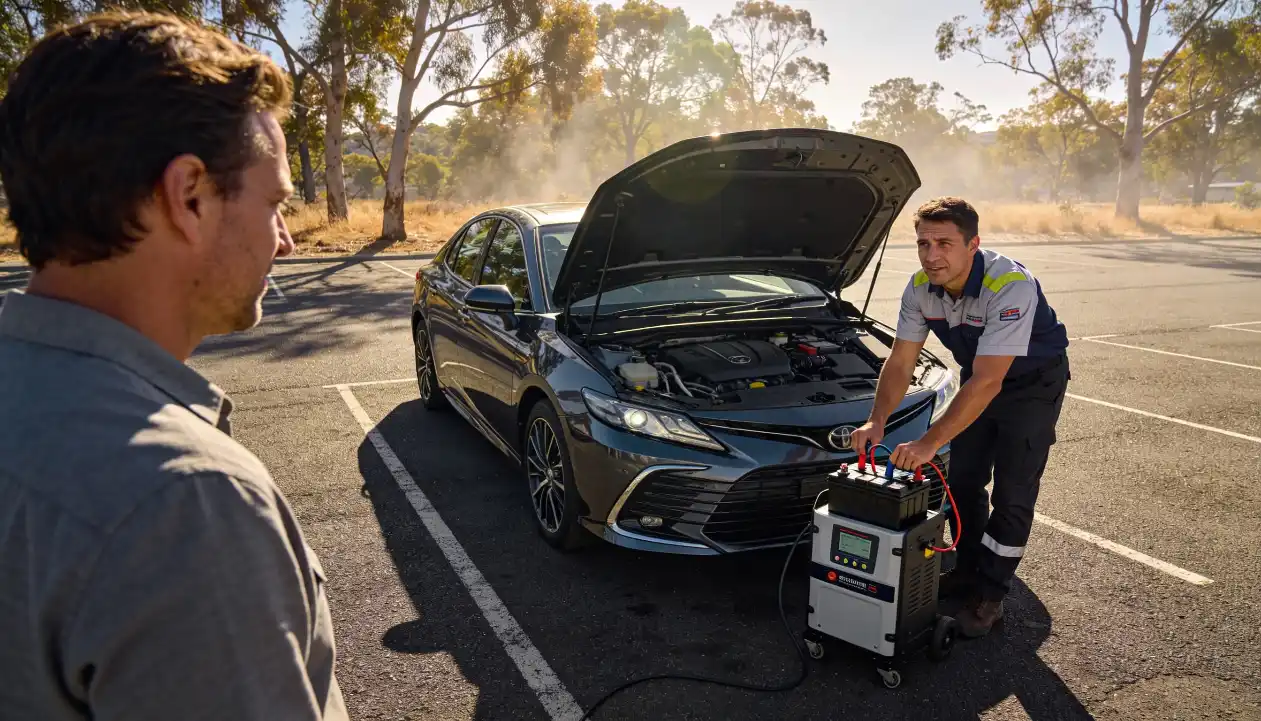
One of the worst things that can happen to a driver is becoming stranded along the highway. You’re driving along listening to the radio, and the next thing you know your engine is sputtering, smoke is coming from under the bonnet, or a tyre has popped. Your heart rate spikes, adrenaline rushes, and you have to make quick decisions as cars speed past you. If you’re towing an EV in the summer heat, an extra set of rules applies before any truck arrives.
After you’ve managed to get the vehicle to the side of the road and called a local tow truck or roadside service, the initial panic may ease — but you’re by no means out of the woods. It’s actually the time between calling for help and the tow truck’s yellow flashing lights appearing behind your car that is the most dangerous part of a breakdown. If you aren’t positioned properly, sitting or standing in a disabled vehicle beside a busy road is a genuinely risky place to be, and it’s a very different situation from comparing roadside towing vs private towing from the comfort of your driveway. You need a plan to keep you, your passengers, and your car safe from a secondary accident. Here are five practical steps to follow while you wait.
Get As Far Off The Road As Possible
The first thing to do the moment your car develops a problem is to get as far off the road as you can. Don’t come to a halt in the middle of a lane if there’s any momentum left in the car. Coast or steer the vehicle as far onto the shoulder as possible. On a busy multi-lane road or highway, aim for the left-hand shoulder wherever you can. If an exit ramp, a service station driveway, or a public car park is within coasting distance, head straight for it. Being fully off the road gives you a much greater chance of avoiding a collision with a distracted driver, whether that means being sideswiped or rear-ended. Once you’ve stopped safely, straighten the front tyres and pull the handbrake on tight. This stops the car rolling into traffic if the road is uneven or another vehicle clips the bumper. For a step-by-step rundown of signalling and calling for help once you’re stopped, see our guide on staying safe after breaking down on a busy highway.
Make Your Car Impossible To Miss
Distracted driving is one of the top causes of roadside collisions. Drivers checking their phone, adjusting navigation, or talking to passengers may not notice a stopped car on the shoulder until it’s too late, so your job is to make your disabled car impossible to miss. Turn your hazard lights on as soon as you stop, and leave them blinking the entire time you wait, even if it takes hours for the tow truck to show up. At night, in heavy rain, or in thick fog, use your interior dome light and headlights as well — the more oncoming drivers can see your car, the sooner they’ll move over and give you room. If you carry a roadside emergency kit in the boot, this is the time to use it. If it’s safe to do so, exit the vehicle from the non-traffic side and set up reflective triangles or flares behind the car, the first about three metres back and the second around thirty metres further, giving approaching drivers plenty of time to change lanes safely.
Where Is The Safest Place To Wait?
There’s no one-size-fits-all answer here — you have to quickly assess what’s around you and decide. The safest option is usually to stay in the vehicle with your seatbelt on, unless the road is fast and narrow with no barrier or grassy bank alongside it. Modern vehicles have crumple zones and airbags that offer real protection if another car makes contact, whereas standing unprotected on a narrow strip of bitumen beside highway-speed traffic leaves you completely exposed. If you can exit through the passenger-side doors, away from the roadway, and get behind a sturdy guardrail, up a grassy embankment, or into a nearby building, do that instead. The best roadside barrier is always something solid between the road and your body. Never stand directly in front of or behind your car — if someone collides with it, you’ll be crushed on impact.
The right spot to stop also depends on where the trouble starts. If it happens near a junction, read our breakdown of the safest places to pull over at Melbourne intersections before you decide where to stop.
Breaking down with young children or pets adds another layer of stress. Panicked people make decisions they wouldn’t normally make, like opening a door into live traffic to see what’s wrong. As the driver, take command straight away — tell everyone to keep their seatbelt on and stay calm. If you decide it’s safer to remain in the car, lock the doors so children can’t open them out of boredom or curiosity. If you move to a grassy embankment, keep young children close by the hand, and keep any dog on a short, secure lead before opening the door, since a frightened animal can easily bolt into the road at the sound of a passing truck.
Stay Alert Until The Tow Truck Arrives
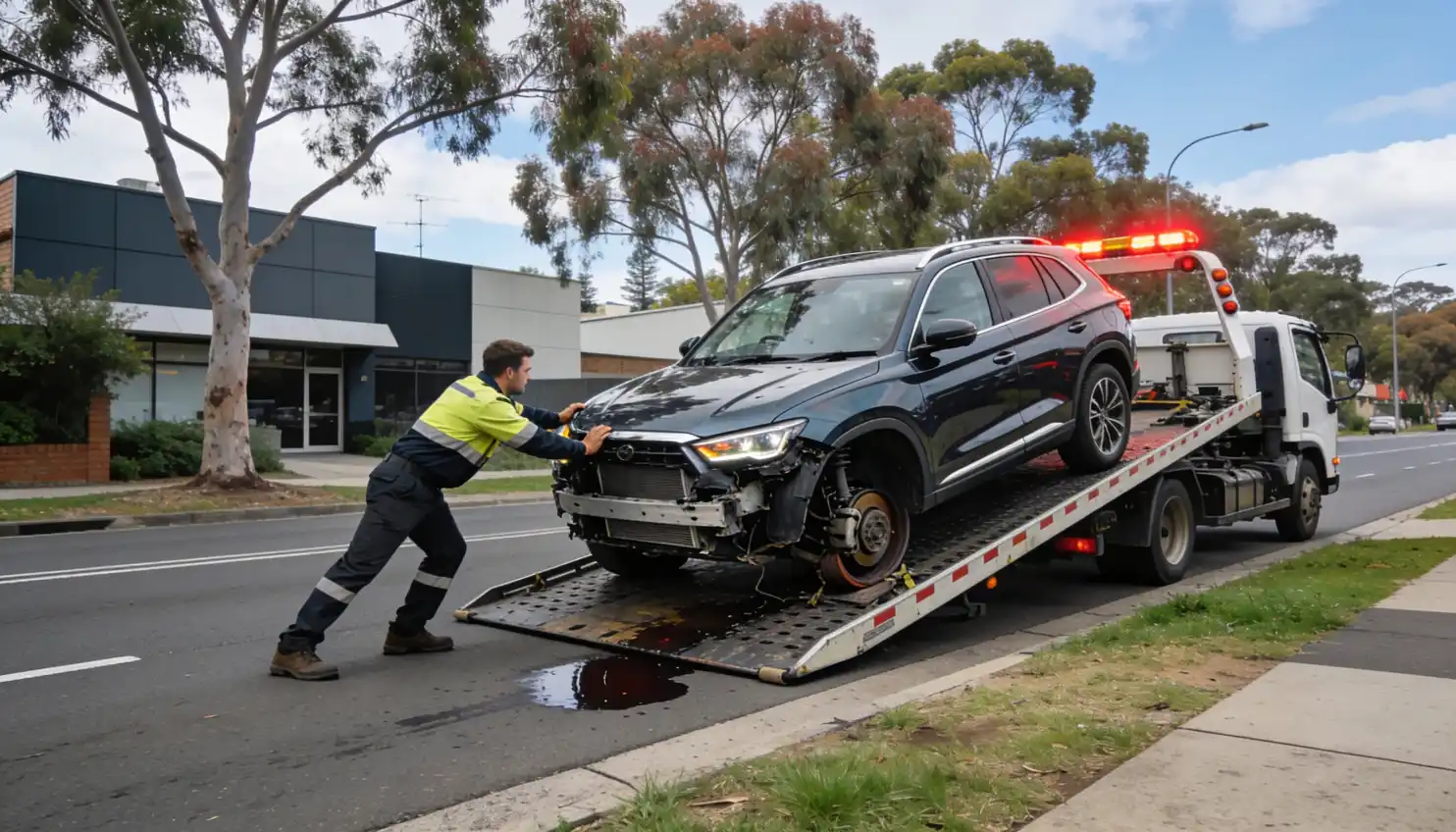
Waiting for a tow truck can take a while, particularly in heavy traffic, bad weather, or overnight. It’s tempting to relax, scroll through your phone, or even doze off, but that’s a real mistake. Stay alert until the truck is hooked up and you’re back on the road. Keep checking your mirrors and watch how oncoming traffic is behaving — if a car drifts toward the shoulder or starts swerving, those few extra seconds of warning could be the difference between bracing yourself and climbing clear. When the tow truck does arrive, don’t jump out of the car straight away. Wait until the operator has parked in front of you, switched on their overhead warning lights, and walked over to your window to guide you. They work in hazardous traffic zones every day and know exactly when and how to get everyone out safely, so let them lead. Whether the fix needs a quick wheel-lift hookup or a full flatbed tow trucks recovery, or simply getting the family car home, choosing a reliable towing company from the start makes the whole experience far less stressful. It also helps to know why waiting for a roadside club might be your biggest mistake on a busy Melbourne freeway.
Curious what the call-out will actually cost? Read our tow truck price breakdown before the truck arrives so there are no surprises on the invoice.
Get in touch with Southern Towing & Removals