That is the feeling that each and every driver has already had at some stage or another – turning the key in the ignition or pushing the start button and nothing happens. In this stressful moment, you’re more likely to reach for a set of jumper cables or find a friendly motorist to jump-start your battery. A jumpstart is a quick, easy and highly efficient way to get back on your commute if you’ve got a dead battery.
Connecting jumper cables to a car with a serious mechanical, electrical, or structural problem, however, is time consuming and can also lead to major damage to sensitive onboard computer systems. But if your car is having a big power train problem, you will only exhaust your patience if you continue to jump it over and over again. You can distinguish between a trivial dead battery and a serious mechanical failure, so you’ll know which to choose straight away.
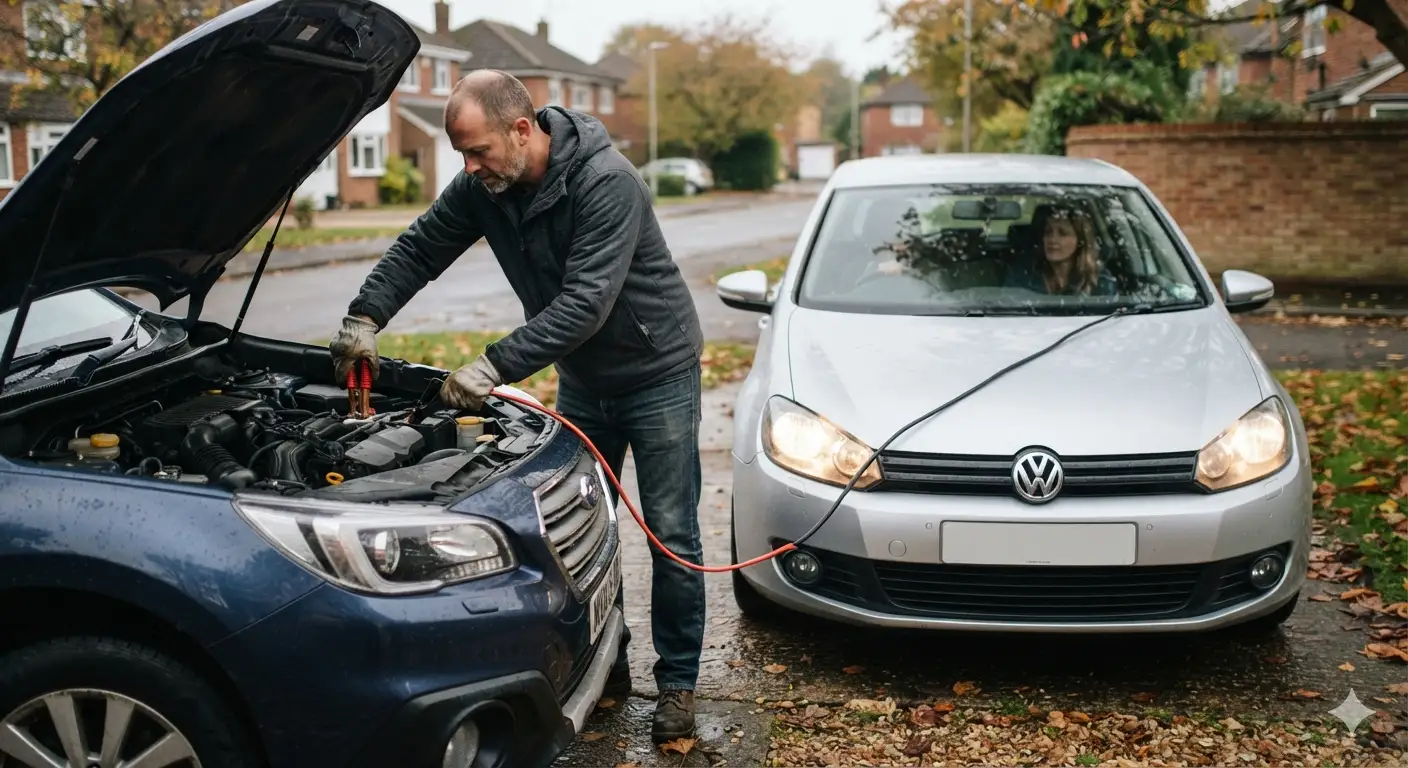
This complete guide will tell you the four warning signs that you should not attempt to climb into your car, but should call for a professional flatbed tow truck to come to your exact location.
Violent Cranking, Knocking, or Complete Engine Silence
To know that a jump start won’t work on a car with a drained battery, you must first learn what the healthy starter motor sounds like while trying to operate against a weak battery. As a battery fails, the car will usually produce a single loud click, or the engine cranks over very slowly and weakly, and then stalls. If this unique clicking sound is heard, a jumpstart is needed.
Warning Sign Number 1: Cranking Without Catching
If you turn the key and the engine cranks normally, at a normal crank rate and with a loud, strong noise, but will not start, your battery is OK. There is ample power to drive the starter motor. Rather, your vehicle is having trouble with the fuel delivery system, a broken timing belt, blown spark plugs or an ignition system malfunction — some of the most common roadside problems we see. In this case, it will only overheat your starter motor and fill your engine cylinders with oil.
Warning Sign Number 2: Loud Internal Mechanical Noises
If, when the vehicle is tried to start, a loud, violent, metal knocking, grinding, or screeching sound occurs from the bottom of the engine compartment, do not attempt to jumpstart the vehicle. When these loud noises are heard, they mean that your engine is in serious mechanical trouble such as a cracked crankshaft, broken pistons, or a total oil starvation failure of the engine. It’s easy to break the engine block when using a high voltage boost from another car to try and spin the engine over.
Pungent Smells of Smoke, Fuel, or Burning Plastics
Your sense of smell is one of the best diagnostic tools when evaluating a disabled vehicle is the pungent smell of smoke, fuel or burning plastics. There is little or no smell of a dead car battery. If your car won’t start and you are smelling a strong, distinct or overwhelming odor, it is a definite sign of an underlying hazardous situation, which is a definite call for an immediate tow.
The Scent of Electrical Fire
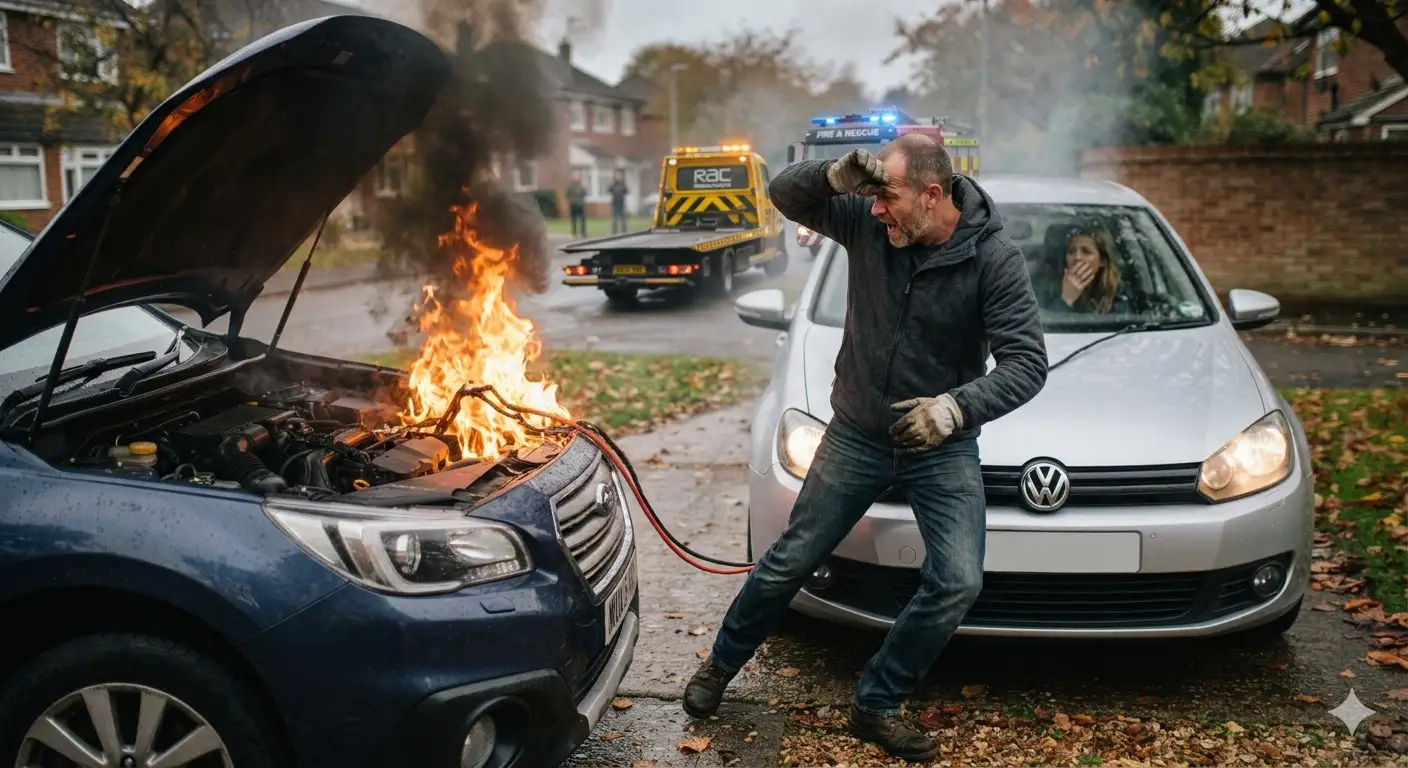
If you notice an acrid, sharp smell that is reminiscent of burning plastic, melting rubber or electrical insulation, get away from the engine compartment right away. This is a serious short circuit in the main wiring loom or alternator. When connecting a heavy-duty jumper cable to a vehicle that has a large electrical short, the rapid spurt of high currents can burn through the power lines, fry the Engine Control Unit (ECU), or start a serious electrical fire in the vehicle on the roadside.
The Scent of Raw Fuel Leaks
If there is a strong gasoline smell under the hood or in the vehicle’s ventilation system, it may signify a fuel line leak, fuel injector failure or a fuel rail leak. Starting a car with a malfunctioning fuel system is extremely hazardous. The small sparks that are created in the process of attaching jumper clamps to a battery terminal could easily ignite fuel vapors in the air and cause an engine fire that could be explosive. If you smell fuel, do not use the cables and contact a licensed local towing service straight away. Always take a close look at the pavement beneath your front bumper before opening the hood to inspect battery terminals. Your car has a number of fluid systems that function under pressure and are closed.
Rapidly Pooling Fluids Beneath the Engine Bay
There are several closed-loop fluid systems that operate in your car safely. Rupture these systems and a jumpstart will be of no use.
Bright Green, Orange, or Pink Puddles (Coolant)
If you see a large puddle of bright sweet smelling fluid under the radiator that is growing quickly, your cooling system has suffered a catastrophic failure, including a blown water pump hose or a cracked water pump. If the engine can be restarted with a jump-start, driving without coolant will result in the engine getting very hot very quickly, and will be in the “red zone” in less than a few minutes. This extreme heat can warp your cylinder heads, damage your head gaskets before you can get to the closest auto repair shop.
Dark Brown or Jet Black Puddles (Engine Oil)
If you have a large puddle under your oil pan, it means you have a structural failure, whether it is a hole in your oil pan, a blown main seal or a complete leak of your oil filter. Without oil pressure, an internal combustion engine has tremendous friction; internal metal parts weld themselves in just a few seconds. When your fluids are pooling on the ground your car should not be on a jumper line, but on a flatbed tow truck.
Dashboard Warnings and Structural Safety Red Flags
Modern cars have the power of highly advanced diagnostics, which alert you if a system is too worn to operate safely. If your car will not start and the dashboard has some special illuminated symbols, then it’s trying to tell you that you can’t save the car with a jump-start.
The Check Engine and Oil Pressure Lights
While a low battery may result in the dashboard lights flickering or dimming, steady bright warning lights will indicate otherwise. When your “Check Engine” light flashes quickly or the “Low Oil Pressure” oil can stay on when you start the ignition, your vehicle’s computer has found a serious problem. If any of these four warning signs apply to you, stop reaching for the jumper cables and get in touch with a towing crew who can assess the vehicle safely on-site. And if the failure catches you far from home, here is what to do if you end up stranded on the road while you wait.