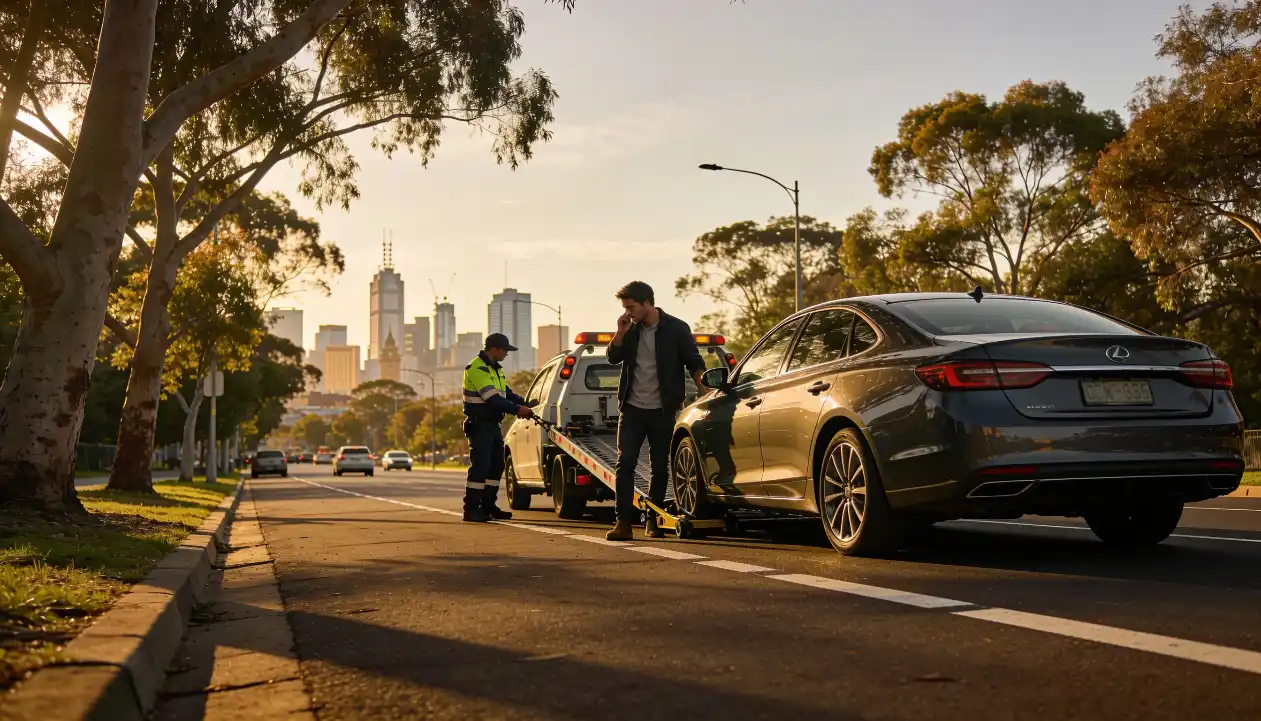
It’s a hot 38°C January day, or a freezing rainy evening in July. You’ve just finished a long day at work and hopped into your car in Dandenong, or you’re heading out on a weekend trip beyond Geelong. You turn the key or hit the start button. Click. Click. Nothing. If you’re trying to work out whether it’s a dead battery or a dead starter motor, or your radiator has split open and coolant is running onto the bitumen.
Your immediate reaction is likely to reach for your wallet, find your membership card with a large roadside assistance organisation, and call them. Then the waiting begins, once the automated voice tells you the wait time is three to four hours due to “high demand.” Traffic rushes past on a risky roadside, with no relief in sight. A roadside club membership is a sensible thing to have, but it can leave you vulnerable exactly when the club is busiest, whether that’s peak hour or a spell of bad Melbourne weather. This guide explains why roadside breakdowns back up across Victoria, the hidden dangers of waiting on the state’s major freeways, and how a private emergency towing company can get you home faster and often for less.
Why the Melbourne Roadside Bottleneck Is So Long
Melbourne’s population is growing fast and our road infrastructure is being pushed to its limits. Major club members are first in line, high-risk situations such as children or pets in the car come next, and a typical mechanical fault or flat tyre sits at the back of the queue. Many drivers don’t realise the standard roadside clubs don’t run an unlimited fleet of their own trucks. When demand spikes in a large catchment like the outer western suburbs (Werribee, Melton) or the northern growth corridor (Craigieburn), they subcontract the job out to a local towing company anyway — so calling one directly cuts out the corporate middleman and the hours spent on hold. Waiting three hours for a patrol van in a quiet driveway in Camberwell is an inconvenience. Waiting three hours on the shoulder of the M80 Ring Road or the West Gate Freeway is a genuine safety risk.
The Hidden Danger of Waiting on the Freeway Shoulder
The “side-swipe,” or secondary collision, is one of the most common serious accidents on Victorian highways. Left unmarked, a vehicle parked on the shoulder is easy for a careless driver, an overloaded truck, or poor visibility in the rain to miss, and Melbourne gets plenty of rain. When a vehicle can be safely moved off the freeway onto a suburban side street or into a service station car park, sitting for hours waiting to be towed is a real risk you don’t need to take. In these situations, it’s always safest to have your car collected on a flatbed tow truck and taken somewhere secure without delay.
Roadside Club vs Private Tow: The Richmond Alternator Scenario
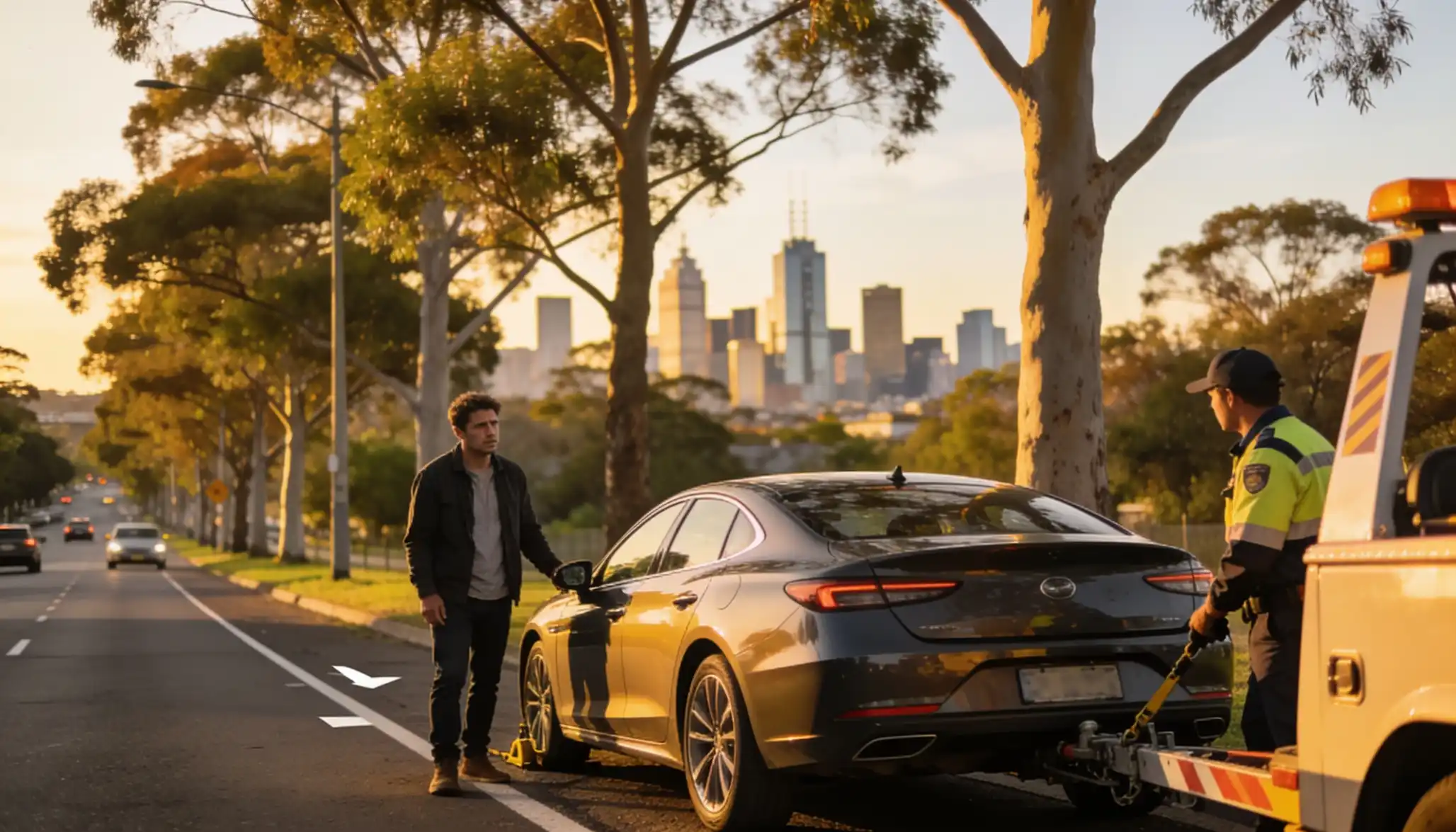
One common misconception is that a private tow always costs more than an annual membership. Take a typical breakdown: your alternator fails in Richmond. On the roadside club route, you wait two hours for a patrol van. The mechanic checks the car, confirms the alternator is broken and can’t be fixed roadside, and tells you the vehicle needs to be hauled to a garage — so you wait another hour or two for a tow truck to arrive from out of town. Half your day is gone before the car’s even moved. On the direct private tow route, you call a local Melbourne towing company and a modern tilt-tray truck arrives within 30–45 minutes. The driver safely loads your car and takes both you and the vehicle straight to your chosen mechanic, or your own driveway, in one trip. Weighed against the time lost, the safety risk, and the fact that major mechanical issues can’t be fixed on the side of the road, a direct tow is very often the more cost-effective and efficient choice.
What To Do While You Wait for the Tow Truck
Once you’ve skipped the corporate queue and called a dedicated Melbourne tow truck, use the time until they arrive to keep yourself and your vehicle safe:
- Chock your wheels: if you’re stopped on a hill, such as the hilly ground around Greensborough or the Dandenong Ranges, turn your wheels toward the kerb and apply the handbrake firmly.
- Pack your valuables: remove your wallet, phone, house keys, and any valuable electronics from the car so you’re ready to move into the truck cabin as soon as it arrives.
- Stay visible: if it’s dark or raining, leave your parking lights or hazard lights on so the tow operator can spot your vehicle easily in traffic.
Not every breakdown happens on the open freeway shoulder either. If your car gives out near a busy intersection, the safe stopping rules are different again — see our guide on the safest places to pull over near a Melbourne intersection.
Don’t get trapped in a corporate roadside assistance line — make your safety and your schedule the deciding factor. When a major mechanical failure hits and you don’t want to spend hours hoping a patrol van shows up, a direct call to a family-owned, professional towing team with a flatbed truck will get you and your car out of trouble quickly, without the corners sometimes cut by a budget towing operator.
While you wait, keep yourself visible and protected — our guide on staying safe after breaking down on a busy highway covers hazard lights, warning triangles and when it’s safe to exit the car.
Get in touch with Southern Towing & Removals