Right after a highway accident is a time of confusion, disorientation, and chaos. The initial priority after the impact is to get to safety; while dealing with the shock, look for injuries, and exchange insurance details. Unfortunately, this makes it an open opportunity for the financial predators to take advantage. Inside the auto, law enforcement sector, they’re known as “bandit” tow trucks, meaning they’re not called by police and instead patrol high-accident corridors and respond to accidents unsolicited. They attack motorists who have been stranded or stressed by using shrewd tricks that can lead to your car being “stolen” for thousands of dollars. To avoid predatory towing, it’s important to know how the scams work and what rights you have.
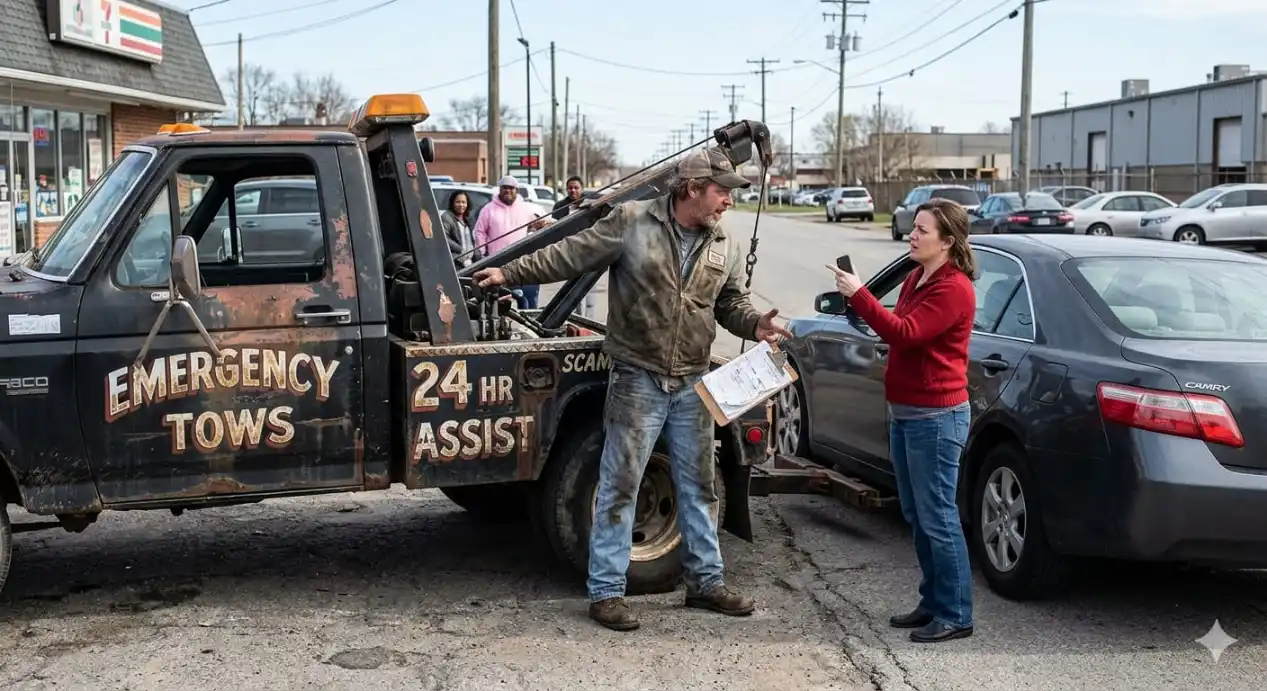
Anatomy of a Bandit Towing Scam
A legitimate towing service is based on an explicit dispatch model, which is known as Anatomy of a Bandit Towing Scam; You, your insurance company, a roadside assistance company, or law enforcement upon arrival call a company to request assistance. This network does not cover a bandit tow truck. They can be around within minutes of an accident – and sometimes before emergency services. The operator will likely look friendly, helpful and very professional and say, “I was just passing through” or “We were sent here by the city” to clear the lanes.
After gaining your confidence, they lurch to connect your car in a few minutes, often finishing the task by showing you a form they are going to sign as a “normal authorization to tow. In fact, this paperwork is a binding agreement with hidden stipulations that enable them to take your car to an unmarked, unregulated storage lot, impose excessive fees for parking your car daily, and require huge sums of cash before you can obtain your vehicle.
Red Flags: How to Spot a Predator at the Scene
To recognize a predatory tow truck operator, one must pay attention to how they act, their paperwork and credentials during pressure.
- Unauthorized Entry: The primary warning sign is that the truck arrives without your or your insurance company’s or the police’s call.
- Vague or Missing Identification: Legitimate tow companies will have the company name, phone number and Department of Transportation (DOT) or local regulatory license number permanently painted or decaled on the driver and passenger doors. Bandit trucks may have unmarked doors, magnetic signs that can be easily removed or out of state plates.
- Do Not Let Operators Connect To Your Vehicle If They Do Not Provide a Clear, Itemized Breakdown of Hook-up Fees, Per-mile Rates and Storage Costs in Writing Prior to Touching Your Vehicle.
- High-Pressure Tactics: Predators out of time. They will try to rush you to enter into an agreement on the spot, stating they have a traffic fine or your vehicle is in violation of a law to give you time to read the agreement.
- Bandit Operator: If asked where they are storing your car, they will give vague answers such as “to the shop” or “our local yard” and not provide a specific, physical address.
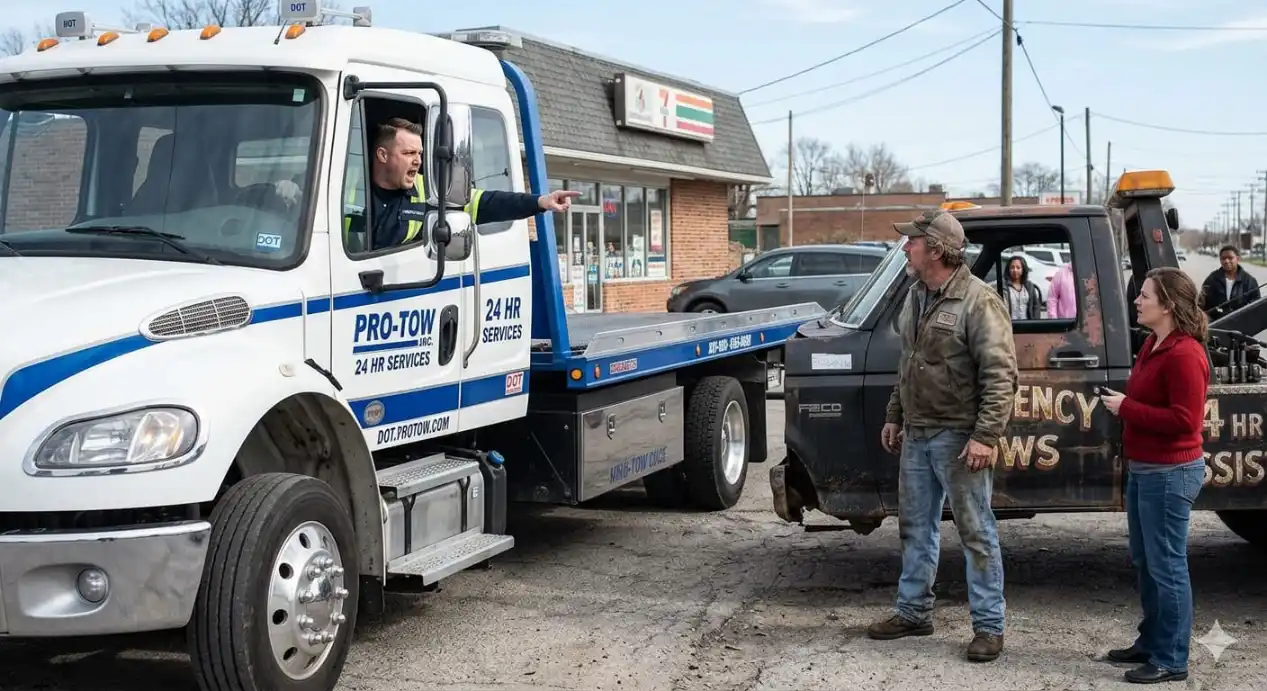
Step-by-Step Guide to Protecting Yourself After a Crash
After a collision, if you’re on the side of the road with an unwelcome tow truck, follow this procedure to keep things under control.
- Do not Sign Blank or Incomplete Documents. Avoid signing documents that have not been filled out by a tow operator. Read the entire document carefully. Pay attention to “gate fees,” “auxiliary labor,” “special equipment charges,” or “administrative fees.” Don’t forget to specify the total cost and destination yard address in the document.
- Ask for the Digital Dispatch Ticket/Confirmation Number if the operator says they were dispatched by your insurance company or roadside assistance. Compare this directly to your insurance mobile app or contact your insurance company to confirm the truck on-scene is the one they sent. If you are on the scene and there are police officers, let them know if an uncalled tow truck is pushing you.
- Use the police “rotation list.” Law enforcement has a strict “rotation list” of local towing companies that are vetted, licensed and regulated. If for safety reasons a vehicle must be removed from the highway immediately, ask the officer to give you a company from her official rotation list.
- Document everything. Take photos of the tow truck, license plate, company logos on the side of the tow truck, and the operator’s identification card using a smart phone. If they offer them papers, take photos of the paper first, then sign the paper, and make sure you get a physical and/or digital copy at the time of signing.
- You have the legal choice of where you have your vehicle towed. Tell the driver to drive straight to your house, your favorite independent auto repair shop or an official insurance authorized direct repair shop. Do not let an operator decide where to store! Knowing roadside towing versus private towing makes it easier to pick the right operator.
The Mechanics of Price Gouging: Breaking Down the “Hostage Fees”
When a predatory bandit tow truck takes control of your car, the financial blow to the victim isn’t a one-time tow, but rather the “hostage fees” that follow. But it is not the result of a random collection of overstated and bogus surcharges, rather, it is the result of a tightly created list of overstated and bogus surcharges that maximize the payoff on you or your insurance company. Knowing about these frequent “hostage fees” will help you guard against line item fraud on towing bills before you pay.
- Administrative Fees: Predatory operators regularly ask you to pay between $150 and $450 just for entering your vehicle information into their computer system, or just for doing simple bookkeeping and paperwork on the inside.
- Gate / After Hours Access Fees: Yards will also ask you to pay an extra fee, sometimes in excess of $100, to open the gate, and then even collect your belongings if outside of business hours (and sometimes during hours).
- Auxiliary Labor & Special Equipment: Bandit towers often add the terms “specialized rigging,” “extra labor” or “advanced blocking” to the invoice without actually using the equipment at the scene of a typical highway collision.
- Storage Fees: Bandit Yards have high prices of $100-$250 per day and the charges start the second the vehicle crosses the threshold of their yard, legally the storage can be capped by the municipal rotation towers.
The Role of Insurance: How Providers Fight Back (and How It Protects You)
Many motorists make this mistake by thinking that if they are the victim of a bandit tow truck they will not have to worry about anything else because they have a comprehensive auto insurance policy. The insurance companies are well aware of predatory towing syndicates and have Special Investigation Units (SIUs) for an intensive fight against this insurance fraud. Insurance claims adjusters will take a closer look at each individual line item on an invoice from a bandit yard that lists thousands of dollars in bogus “hostage fees.” The insurance company will not pay the higher amounts if the towing company doesn’t have the evidence in the form of photos that they are actually using specialized equipment or if the charges they are being paid are more than the local municipal codes allow.
This will also save the insurance company from any fraudulent payments, but it can create a situation where you are unable to get your car from the yard until the difference in money is cleared up. You should use your insurance adjuster from the moment the vehicle is towed, and you should not sign any “right to repair” or direct billing forms at the scene, allowing your insurance company’s lawyers to get involved immediately to handle the task of getting the vehicle back on the roads and make sure your premium is not going up because of a scam.