Suppose you are driving along a busy interstate highway and your car stalls; lights come on in the car; and you see the power loss rapidly increase. High speed, congested highways are one of the most stressful situations a modern driver can find himself in. On the major traffic routes thousands of incidents happen on the road each year, and safety is paramount. If your vehicle breaks down, knowing what to do can help avoid a secondary crash, and can save lives and protect passengers. From busy urban highways to winding state roads, here’s how to safely manage a blowout while driving on the highway.
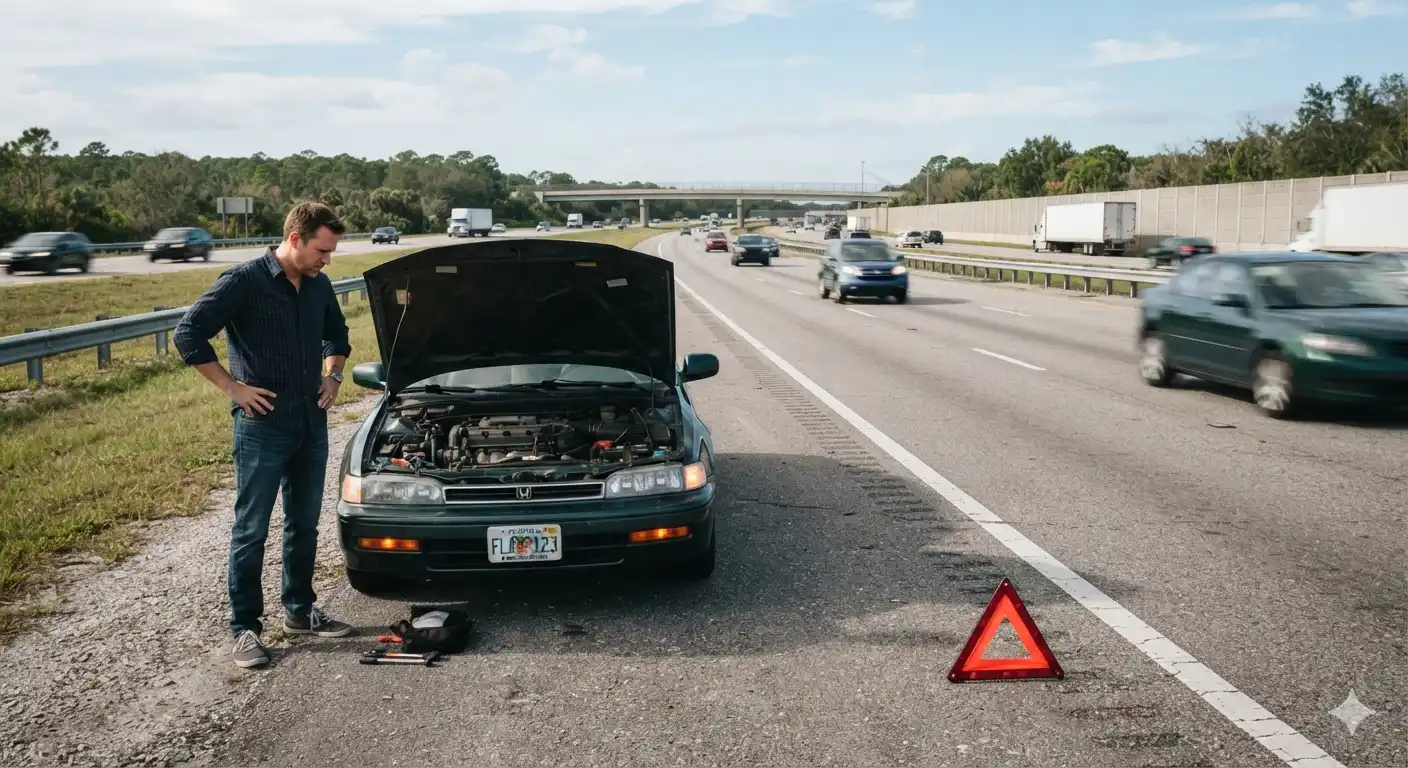
Move Your Vehicle to Safety Immediately
The moments immediately following a vehicle malfunction are critical. The first thing you want is to pull your car out of the flow of traffic to prevent a rear end collision. High speed traffic has no opportunity to brake for a stationary object in a live lane and therefore quick defensive positioning is required.
If the vehicle has momentum, make sure to move it safely towards the rightmost edge of the highway. The widest safety cushion between your car and other cars in your path is the right shoulder. Do not stop at the left shoulder unless it is not physically possible to cross the lane to the right shoulder, since vehicles drive the fastest in the left lane, where the danger is high. Once stopped on the shoulder, go as far right as the ground is able. If a guardrail, concrete barrier or wide grass verge is present, park near it. This will provide you additional room off of the white line where fast moving traffic travels. You are not far enough from active traffic if your vehicle is partially on the pavement, and partially on the grass. Choosing the right safe place to pull over makes every step after it far less dangerous.
Signal Your Presence to Other Drivers
Always position as far away from the road as possible. If lost on a busy highway, make sure you make yourself visible to other drivers. Your car needs to be easily seen from a long distance from traffic so they can move over.
Activate Hazard Lights
Turn on four-way flashing lights (hazard lights). Don’t turn them off, even in the middle of the day during the breakdown. The flashing lights warn traffic behind of slowing down or stopping.
Turn on Interior Lights
If it is dark, wet or foggy outside, turn on your vehicle’s dome or cabin lights. This provides additional inside light that will warn motorists of their approach. A brightly lit vehicle cabin makes a difference in low-visibility situations and is an additional distress signal.
Pop the Hood
If you can safely do so from inside or away from traffic, pop the vehicle’s hood. A raised hood is a universal warning device to law enforcement, highway patrol and tow truck operators that the vehicle is disabled. It automatically signals if a vehicle has broken down or simply pulled over to use a smartphone.
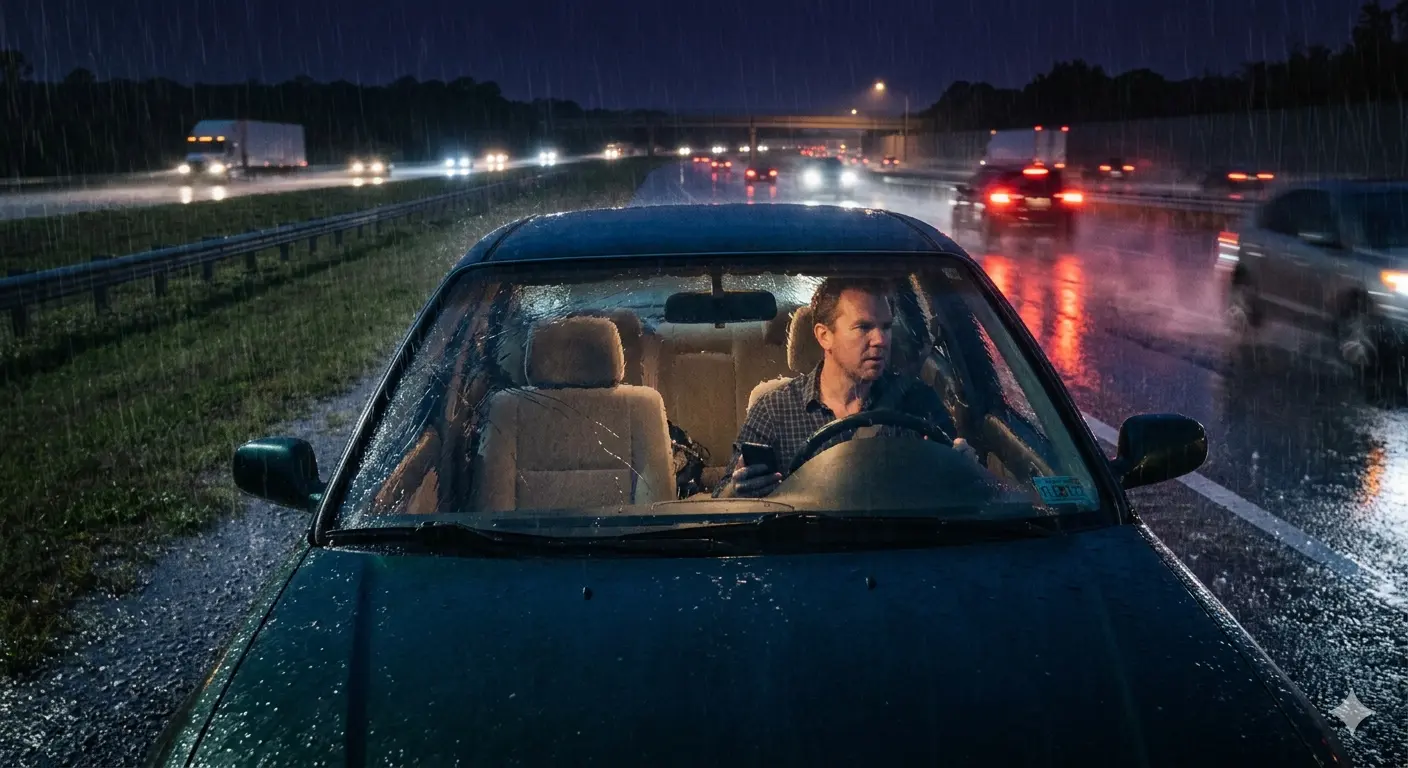
Assess the Situation and Stay Inside
Evaluating the situation and staying in the car is a common error made by drivers when they see damage to the vehicle and want to get out to see what has taken place. It is very risky to get out of the vehicle on the side facing the traffic of a high speed highway. Debris, wind shear caused by passing semi trucks and distracted drivers all pose an immediate hazard to anyone standing outside the vehicle.
Golden Rule: Stay In The Car
If traffic is busy, and the car is on a narrow shoulder, stay in the car with your seatbelt buckled. Today’s cars are designed with car safety features such as airbags and crumple zones to ensure the safety of the occupants in the event of an accident. Your ride is a steel cage, the open roadside is no protection. This is exactly the same guidance we cover when drivers ask what to do if they end up stranded on the road.
When to Exit the Vehicle
Do not leave the vehicle unless a fire is present or smoke is detected, or if it is safe to open the passenger side door and step down to a location behind a guardrail or up an embankment. Do not leave the vehicle out of the way of traffic from the driver side door. If you do leave the car, walk to a safe distance far away from the shoulder and wait there.
Call for Professional Local Assistance
When your car is in place and your emergency signals are flashing, it’s time to call in the professionals who have the expertise to take you safely out of the way from the highway. Never attempt to diagnose complicated mechanical problems from a high speed shoulder. Dial Emergency Services if Threatened: when your car is stuck in an active lane of traffic or you feel that you are in immediate danger, dial emergency services immediately, since highway patrol officers or emergency vehicles can be dispatched to shut down traffic with their sirens and flashing lights, and wait for a tow truck. Call a Local Towing Company: look up a trusted local towing and roadside assistance company and provide them with the exact location when you are calling, such as nearby mile markers, exit numbers or cross streets, so a flatbed towing crew can give you a secure ride to a repair shop without causing further damage. Call or Log In to Roadside Clubs: if you have a roadside assistance membership, request a service vehicle and inform them whether you are travelling with passengers, so they can send the right vehicle and get everyone home safely. Wondering what the call-out will cost? Read our tow truck price breakdown before the truck arrives.
Deploy Emergency Warnings Safely
If you carry reflective triangles, flares, or LED beacons in your emergency roadside kit, be sure to deploy them safely where you have a wide shoulder and are able to see approaching vehicles. Don’t do this if visibility is not good or if the shoulder is narrow.
Check Traffic Continuously
Before opening the passenger side door, check traffic in front of you, in mirrors and windows. Do not exit the vehicle until there is a substantial opening in the traffic stream.
Walk Facing Traffic
Walk on the edge of the shoulder facing traffic at all times, and avoid backing up while using warning devices. Position the first warning device about 10 feet in the rear of your vehicle on the shoulder line, put a second one 100 feet back, and a third one 200 feet back.
Get in touch with Southern Towing & Removals