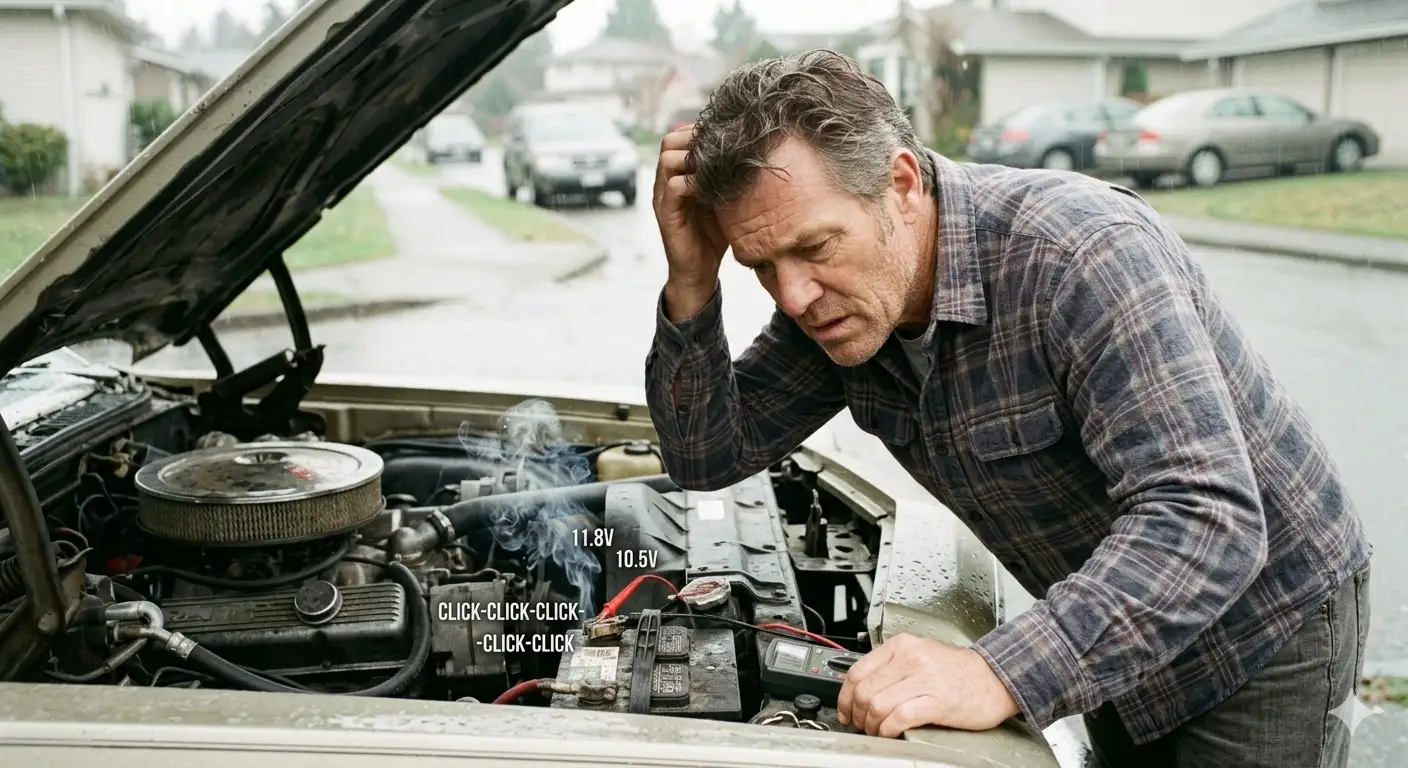
Nothing is more frustrating than putting the key in your car’s ignition or pressing its start button and getting no sound. If your car won’t start, you can’t get to work and you are worrying about the costly repair bills right away. But before you panic or reach out to a local tow service, you can actually be able to determine the underlying cause of the problem by simply listening carefully to what you hear. When your ignition system fails, there is a specific sound that you will hear. Your engine bay is the most important diagnostic clue you have in that it makes noise, or it doesn’t make noise, when you try to start your engine. If it is a fast clicking sound, a single click, or no sound at all, it could be a flat battery, dead starter motor or electrical wiring problem. Knowing the warning signs enables you to take appropriate rapid diagnostic and trouble-shooting actions, or describe the problem to a mobile roadside technician.
Exploring Scenario One: The Constant Clicking Sound
The rapid clicking sound; If you turn the key, and hear a rapid clicking sound like a machine gun, then your vehicle is suffering from the most common ignition failure. This is the unmistakable sound of an extremely drained or lifeless car battery. A small amount of electrical current is drawn from the battery, and travels to the starter solenoid when you start the sequence. Under this pressure the starter gear is forced to dash forward and connect with the engine’s large flywheel. But a big, heavy diesel engine requires a lot of basic electric power. If your battery is severely discharged, it will possess only enough power to activate the small solenoid (the first click) but when it tries to use the huge power required to start the real engine, the voltage plummets. The solenoid immediately releases and springs back to click again. You keep the key in this engaged/disengaged cycle over and over again until you release the key, resulting in that distinctive rapid clicking sound. There’s a quick solution to this situation: jump-start the car at the highway’s side with a set of quality battery jumpers or a portable lithium battery jump pack. Your battery may have been worn-out and need replacement at a local battery center as soon as you turn your engine off if the jump starts, but the battery doesn’t hold a charge the next time you start your car.

Exploring Scenario B: Clicking Sound With Gaps
If you hear one loud, clear and sharp click when you turn the ignition key and then nothing, you’re looking at a totally different mechanical problem. Typically, this is a loud click and means that the vehicle’s car battery supplies ample voltage but the starter motor or its internal solenoid has suffered a significant hardware malfunction. That big report just means the starter solenoid has thrown the starter gear forward and it has engaged the starter gear with the flywheel. It’s all the way to the electrical connection. But after the gear is engaged, the electric motor within the starter assembly does not spin. The internal electrical carbon brushes in a starter motor gradually wear away to dust over the years of daily operation, or the internal armature windings can burn out totally. As the motor does not rotate, the system is locked after the first click. Under the bonnet of an old school emergency, if the starter motor is dead, you can tap a few times on the metal housing with a solid object, such as a wrench or the handle of a screwdriver and the motor will start. Sometimes it’s a physical vibration that will be sufficient to realign the worn-in carbon brushes just enough to make contact with the commutator one final time, and then the car will start and you can drive to an auto electrician. If tapping the housing does nothing and cranking sounds normal and strong, it’s worth checking our guide on the signs your car needs a tow truck instead of a jumpstart.
Exploring Scenario Three: The Absolute Silence
Complete and Total Silence: When the key is turned and no sound whatsoever comes from the vehicle, there is a breakdown in communications in the car’s electrical system. This situation would be a complete lack of electrical power to the starter system. Don’t jump to conclusions; inspect your car’s dashboard instrument panel and dome light. When the dashboard screen is black and the headlights won’t turn on, then you have a completely dead battery. This can be caused by leaving the headlights or interior map lights on overnight, causing all the remaining voltage to be consumed from the cells. If your dashboard lights come on, but the ignition remains completely quiet, it’s probably a safety interlock problem or a blown fuse. Newer automatic cars also have a neutral safety switch that shuts off the ignition system when the gear-shift lever isn’t pushed to the Park or Neutral position. Push your gear lever forward into parking and/or cycle it down into neutral and test again. With manual vehicles, release your clutch pedal all the way to the floorboard to activate the safety clutch switch. If these steps don’t resolve the issue, look for a blown ignition fuse or a damaged starter relay (which may be in the main fuse panel located under your dashboard or near the engine) in your vehicle. Electric vehicles don’t click at all when they fail, and they need a completely different towing approach.
A slow crank is an early warning, and postponing a minor repair like a weak battery is how a cheap fix ends in an expensive tow.
Get in touch with Southern Towing & Removals