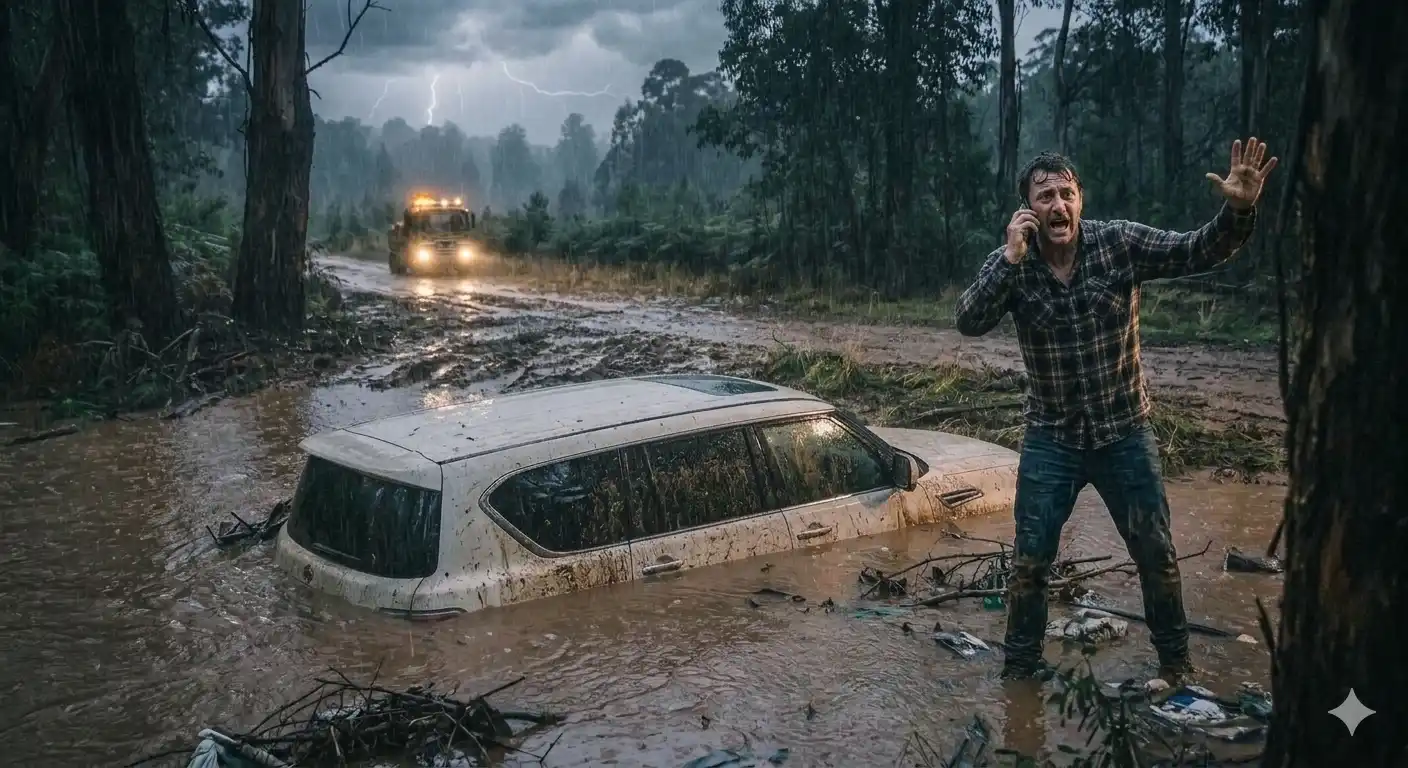
In the South, a sunny day can become blinding rain in under 20 minutes. From an unseasonable summer storm in Georgia to a slow-moving tropical system over the Gulf Coast, storms across the South often bring inches of rain in a matter of hours. The storm drainage system is prone to being overwhelmed due to the flat country roads, dips, and underpasses that are concrete and intersect at low elevations throughout the area. The road, within minutes, is turned into a rushing river.
If the motorist finds himself or herself in such sudden weather events, he or she soon gets confused. You could be driving over a pond and end up hydroplaning, or your engine may suddenly start and die as you pick up speed when going through a deep puddle. If you get stuck in a flash flood, each of your next few decisions will dictate your level of financial and physical loss or safety.
Understanding exactly what to do means knowing the severe danger of a flash flood, mechanical damage such as engine hydrolocking and how hiring professional emergency storm towing is the only way to find real recovery.
Flash Floods and Stalled Cars
Flash floods don’t give drivers enough warning. Water levels can rise a few feet in just a few minutes in many low-lying intersections and underpasses throughout the South. Sometimes a driver may be misled by an underpass appearance and start driving over a puddle only to get to the other side and find that the water reaches his bumper.
Two common potentially hazardous scenarios occur when a vehicle enters deep water: Hydroplaning: When a vehicle’s tires lose traction with the pavement and start skidding across the standing water. The steering wheel suddenly becomes light and unresponsive. The loss of all traction, braking and steering control.
Stalling out: When water goes into the car’s electrical system or into the air intake, it interferes with the combustion process. The engine shuts off and you are left where you are as the water comes flooding through your doors! when the car stalls in water, your first impulse may be to put the key in the ignition or press the engine start button to get the engine going. This is the one mechanical error you can make that is the most dangerous.
If you’re attempting to start your car in water, you risk destroying your car’s engine! Hydrolocking (or hydraulic lock) is a mechanical failure of this kind.
The internal combustion engine is intended to be able to compress a tightly sealed mixture of air and vaporized fuel in the engine’s cylinders. Air is a gas that can compress, causing the metal pistons to rise up and fall down in a regular rhythm and produce power. If that’s the case, however, liquid water is incompressible.
Understanding The Anatomy Of A Submerged Car
When a car is driving through a flood; or when it is just sitting in an area where water is rising; water is like a giant straw being inserted into the air intake system of the engine. When water gets up to the intake grill, the engine pulls water right into the cylinders.
When water is in the cylinders, the pistons will want to go up with great force when you try to crank the engine. The water will not compress, so the piston collides with a wall of non-compressible fluid.
Sudden stops result in a fraction of a second and produce a devastating effect on the motor:
Bent or broken connecting rods: The great blow from the sudden stop causes the heavy steel connecting rods which move the pistons to bend or break.
Pistons break: The piston breaks and metal fragments penetrate the side of the engine block.
Complete engine destruction: If the engine is hydrolocked, there is no way to repair the engine; it will be a costly expense of thousands of dollars to pull the engine out and replace it.
If the car becomes stuck in water, do not start the engine again. Just leave it off so your car stands a chance of survival. Your safety should be the top priority; your car is not as important. When your car is stuck and the water is quickly rising, it’s important to manoeuvre it out of the water in a controlled and calm manner before the water level reaches the vehicle’s windows.
At this time, remain calm and determine the water level:
If the water is rushing, if the water is stagnant. Check its height compared to the doors.
Unbuckle seatbelts at once: Make sure everyone in the vehicle is completely unbuckled, including all kids in the back seat.
Open the power windows at the first sign of rising water: Do this before the rising water shorts out the vehicle’s electrical system.
If water is deep, do not attempt to open the doors: Heavy pressure of the water from the exterior will push the door panels open just about resistant to force. They will also let in more water and make the car sink or float away when opened.
Use a heavy emergency window breaker tool to break the glass of side window and escape if the power window is not able to open, DO NOT attempt to break the windshield as it is constructed from reinforced laminate glass which will not easily break.
Step off the vehicle and go to higher ground without risk: After exiting the vehicle, proceed to higher ground with caution.
Never step into a rapidly flowing stream as it can rip an adult away from his/her legs. Look for the closest building or dry street.
What’s Next: Preserving Your Electronics: Why You Must Call a Flatbed Immediately
After you make it to dry land and you and your passengers are safe, the next most important thing to make happen is to avoid any additional damage to your property and ensure you are covered by your insurance policy. This is where the specialized water damage vehicle extraction comes into play.
The modern car is a complex machine of advanced electronic components, a wiring harness, and sensitive computers that all require meticulous electronic control. These components when submerged in water will slowly be filled with water and lead to corrosion and permanent short circuits.
The key to saving the car from being a total loss is to remove it from the flood area as soon as possible. The car will not be able to be towed by a hook and chain truck, or a wheel-lift wrecker, however. If a vehicle rolls down the road, without the tires, on the axles when it is damp, the transmission can spin, resulting in additional mechanical or electrical grounding.
Tips For Professional Car Towing/Recovery
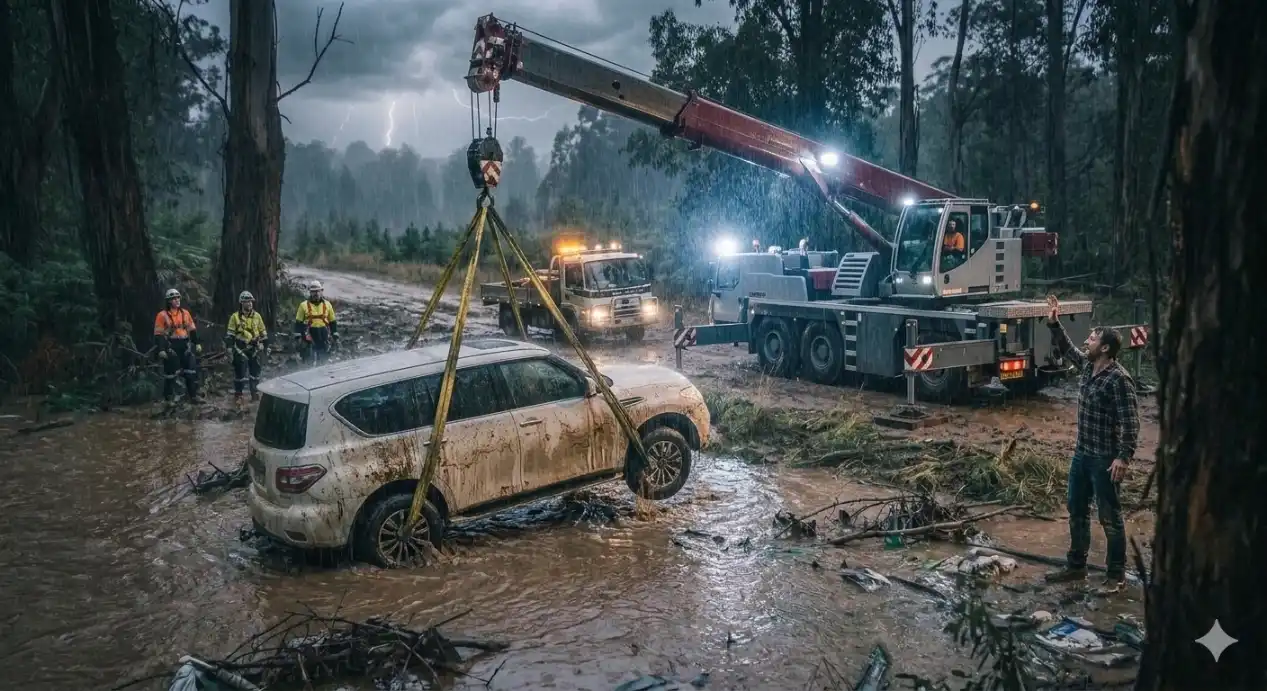
For professional flooded car towing, you have to request a flatbed tow truck. To keep the wheels, driveline, and remaining dry electrical parts from experiencing any additional stresses or rubbing on other parts, the vehicle is fully loaded onto the flatbed.
In addition, if you call a certified flatbed service right away, you will have an official record of your insurance provider. Both the timeline of events and the extent of coverage under the terms of the comprehensive auto insurance policy will be carefully considered when determining if the policy covers the damage caused by a flash flood. This will show the insurance company that you took proactive and responsible measures to minimize damage and should be done immediately.
If a car is parked for hours in an underpass, due to carelessness, the adjuster could refuse the claim, saying that the exposure during hours prevented this car from being ruined inside and out.
Summary: Keep Your Head Above Water
In the blink of an eye, a familiar daily commute turns into a high-stakes emergency scenario due to a flash flood in the South. The next time the next storm comes up on you in a low place, remember the laws of physics.
Avoid driving through strong currents. When stalling, remember that engine hydrolocking is a threat and stay away from the ignition!
Always focus on safety; leave through the windows if needed and contact a professional flatbed service immediately to arrange for recovery. By respecting the water and acting fast, you can save your life, save your investment, and get your car safely back on dry ground.
Get an upfront quote from Southern Towing & Removals