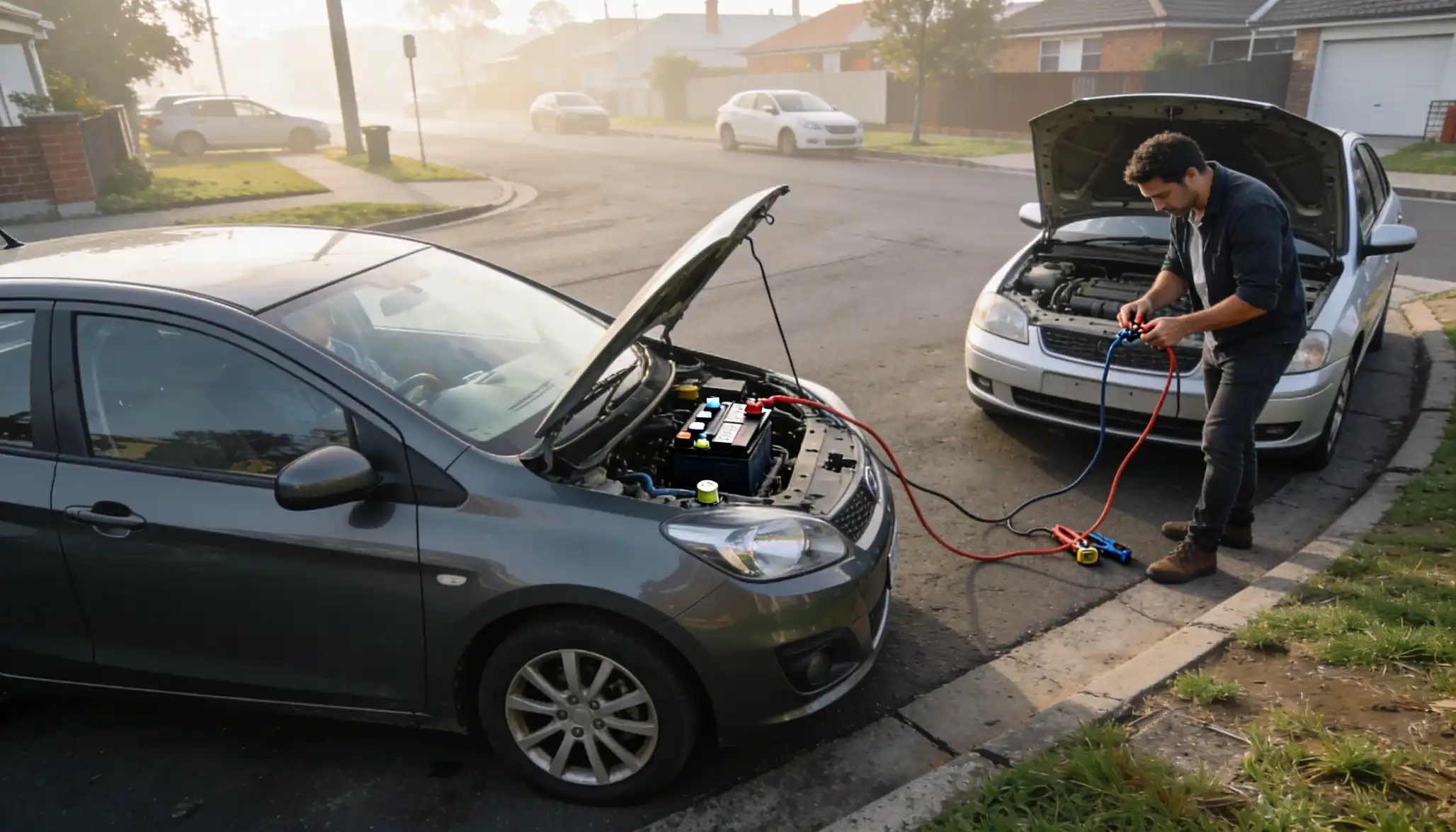
A flat battery never shows up at a good time. One minute you’re ready to leave a car park in Melbourne, and the next you’re turning the key and getting nothing but silence or a slow clicking sound. It’s frustrating, and honestly a bit stressful when you’re not sure what’s going wrong. Learning how to jump start a car can save you from waiting around for help, especially if you’re stuck in a busy area or late at night. Most of the time, it’s just a flat battery not a major mechanical failure and a proper jump start can get you moving again within minutes. But there’s a right way and a wrong way to do it. One small mistake with the cables or sequence can damage your car’s electrical system, which is why so many drivers prefer calling professionals like Southern Towing & Car Removals in Melbourne when they’re unsure or stranded. In this guide, you’ll learn the exact steps, what signs to look for, common mistakes people make, and when it’s smarter to call for help instead of risking further damage. Note that this guide is for petrol and diesel cars only — electric vehicles need a different recovery process entirely.
When your car is actually dealing with a flat battery
Most people assume every no-start situation is a flat battery, but that’s not always true. A real flat battery usually gives you warning signs before it completely dies. You might hear rapid clicking noise when turning the key, or notice that your headlight are very dim or not turning on fully. In some cases, the dashboard lights won’t appear either, which usually means the battery is fully drained. In Melbourne, this often happens after cold nights, short city trips, or leaving lights on in underground parking areas. But if your car is cranking normally and still not starting, the issue could be something else like fuel delivery or ignition problems. That’s where many drivers get stuck they waste time trying to jump start a problem that isn’t actually battery related. From a roadside perspective, we see this mistake a lot. That’s why experienced towing teams always suggest a quick symptom check before connecting jumper leads. It saves time, avoids unnecessary stress, and prevents potential damage to modern electrical systems that are more sensitive than older vehicles.
What you need before you start jump starting
Before you attempt how to jump start a car, make sure you have the right setup. You’ll need a second vehicle with a healthy battery or a portable jump starter pack, plus a proper set of jumper leads. Cheap or damaged cables can make the process unsafe or completely ineffective. Both cars should be parked close enough so the leads can reach, but they must not touch each other. Turn both vehicles off completely, including lights, radio, and air conditioning. Put them in park or neutral and engage the handbrake. This part might sound basic, but it’s where a lot of mistakes happen in real roadside situations around Melbourne. People rush, leave accessories on, or don’t check cable condition. From experience in towing and roadside assistance, taking 60 seconds here can prevent electrical spikes or failed jump attempts later on. If anything looks damaged swollen battery, corrosion around terminals, or burning smell it’s safer to stop and call professional help instead of proceeding.
Step-by-step: how to jump start a car safely
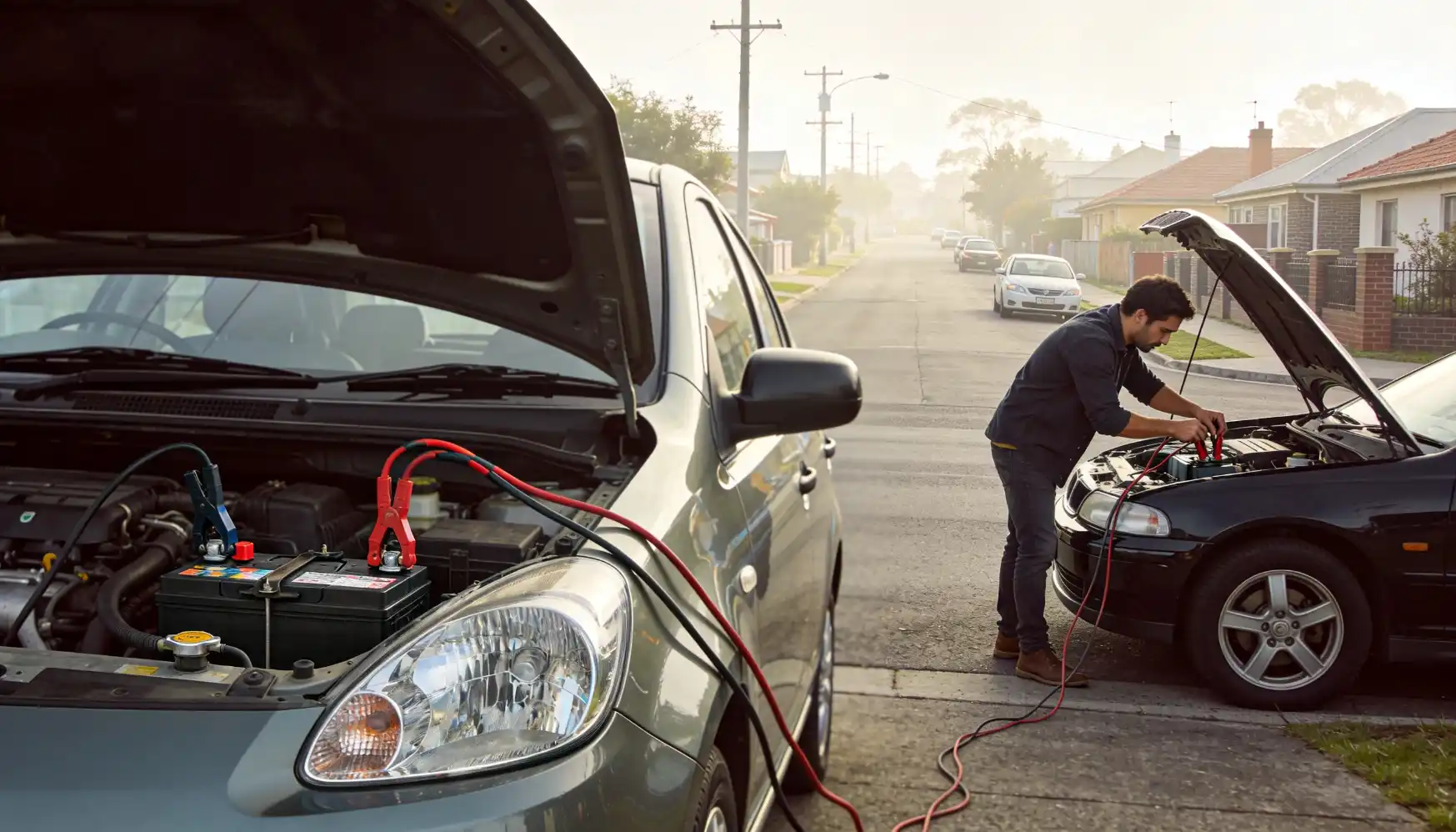
The correct cable sequence matters more than anything else. First, connect the red clamp to the positive terminal of the dead battery. Then attach the other red clamp to the positive terminal of the working battery. Next, connect the black clamp to the negative terminal of the working battery. The final black clamp should NOT go on the dead battery. Instead, attach it to a clean, unpainted metal surface under the bonnet of the disabled car. This grounding point reduces spark risk. Start the working vehicle first and let it run for a couple of minutes. Then try starting the dead car. If it doesn’t start immediately, wait another few minutes before trying again. In real Melbourne roadside situations, especially during winter mornings, we often see cars needing a bit of extra charging time. Rushing this step is one of the biggest reasons jump starts fail the first time. Once the car starts, keep both engines running briefly before disconnecting cables in reverse order. Never let the clamps touch while connected.
What most drivers get wrong during jump starts
A lot of people think jump starting is just about connecting cables, but small mistakes can cause big problems. 1 common issue is connecting the black cable directly to dead battery instead of a grounding point. This increases high spark risk and can damage sensitive electronics in modern vehicle. Another mistake is turning the engine off very soon after a successful jump. The battery needs time to recharge through driving, especially after a full drain. Short trips around Melbourne CBD usually aren’t enough to fully recover it. We also see drivers using worn-out jumper leads that don’t carry enough current. In those cases, the car might crank weakly or not at all, leading people to think the battery is completely dead when it’s actually just poor connection quality. These small errors are why roadside technicians often get called even after a failed DIY attempt.
Comparison table: ways to start a flat battery
| Method | What You Need | Difficulty | Reliability | Best For |
|---|---|---|---|---|
| Jumper Leads | Another car + cables | Medium | High | Home or roadside help |
| Jump Starter Pack | Portable battery pack | Easy | Medium-High | Emergency solo situations |
| Push Start | Manual car + momentum | Hard | Medium | Older manual vehicles only |
| Professional Towing Service | None | Very Easy | Very High | Unsafe or failed attempts |
When you should stop and call for help
If the car doesn’t respond after a couple of proper attempts, it’s usually not just a flat battery anymore. A clicking sound with no crank could still be battery-related, but if there’s complete silence or repeated failure after a jump, the issue may involve the alternator or starter motor. In Melbourne traffic condition, especially on busy road or underground car parking, it is often safer to stop trying and call for expert help instead of risking further electronic damage. This is where a 24/7 towing service like Southern Towing & Car Removals becomes useful. A trained operator can quickly diagnose whether your battery just needs a jump, a replacement, or whether the car needs safe transport to a workshop. Repeated failed jump starts can drain both batteries and sometimes damage onboard electronics, which ends up costing more than a simple call-out. Not sure if your car is even a jump-start candidate? Read our guide on the signs your car needs a tow truck instead of a jumpstart before you connect a single cable. For any other breakdown or vehicle type, the team can also arrange our full range of towing services rather than leaving it sitting unused.
Conclusion
Jump start a car is very simple when done correctly, but mistake can quickly make things worse. If your car still won’t start, getting expert help is the safest option. Southern Towing & Car Removals in Melbourne can get you moving again. If a flat battery has you weighing up roadside assistance against a private towing company, our cost comparison guide breaks down which option actually saves you more. And if the battery gives out right near a junction, check our guide to the safest places to pull over at Melbourne intersections before you attempt a roadside jump start.