Roads are changing significantly and rapidly in Melbourne. From the cabs in the inner city to the suburban drive along the Dandenong Ranges, EVs and hybrid cars are no longer a thing of the future, but a fact of life. Although they are stylish, environment-friendly vehicles, they have a completely different set of rules when things come amiss, as they are silent on the road and produce zero emissions.
Imagine you’re on the Monash Freeway at peak hour driving your new EV and the dashboard shows that there’s a critical warning. The power goes out and you end up on a sidewalk, where you can’t move. Your first thought is to call the first tow truck that comes to mind, and get connected. Stop right there. It may be the most costly error a Melbourne driver can make to treat an advanced electric and hybrid powered car as a traditional gas-powered car. The electric and hybrid vehicles do NOT tolerate towing at all, but do require flatbed recovery. Having these vehicles dragged or pulled with wheels spinning around on the road can be the cause of catastrophic mechanical failure, high electrical damage and a completely voided manufacturer’s warranty.
This safety guide reveals the intricate engineering involved in the dangers of standard towing for modern powertrains under emergency conditions, and offers ways to keep your hi-tech investment safe during a roadside emergency.
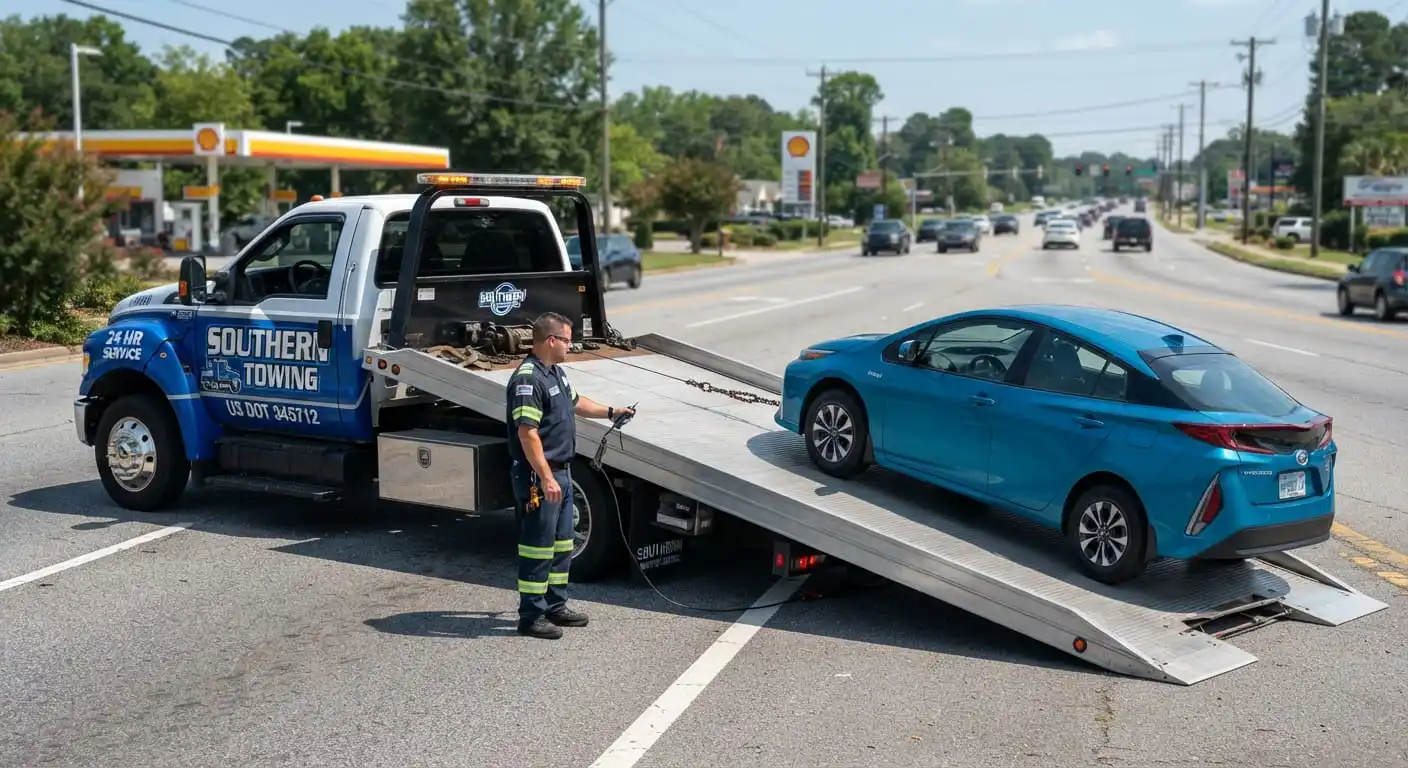
This is the Core Mechanical Trap: No True Neutral
To grasp the full extent of the damage that is caused by traditional towing, it is best to do a quick inspection under the undercarriage of the vehicle. In a conventional petrol or diesel motor vehicle, neutral is a mode that will physically disconnect the engine from the drive wheels. After the mechanical separation, the wheels can rotate without affecting the pistons in the engine and without generating heat within the powertrain for hundreds of kilometers.
Electric vehicles are not like this. Typically, most EVs are either direct drive or have an integrated reduction gear unit which means that the electric traction motor is locked to the drive axles all of the time. The neutral mode on an EV’s dashboard screen doesn’t actually remove anything. You are merely sending a message to the motor software to NOT send electricity to the motor. As the drive wheels touch the bitumen at the same speed, the internal components of the electric motor have to turn with the drive wheels, which is a drawback. This design nuisance will make your car’s electrical systems a nightmare.
Power Generation Without Control: The Frying of the System
An external force (such as being towed by a non-electronic, conventional tow truck), when applied to an electric motor, instantly turns the motor into an electrical generator. This is based on the same principle as regenerative braking: It recovers the kinetic energy you lose when you slow down and puts it back into your battery. But regenerative braking is a very finely tuned process and needs to be closely controlled by advanced onboard computers when the car is running and operating normally. The vehicle is usually powered down, glitched or compromised mechanically when undergoing a breakdown or recovery.
Standard wheel-lift trucks lift the front end of an EV and let the driven rear wheels roll at 80 km/h along the highway, where the spinning wheels drive tremendous amounts of un-controlled, high voltage electricity back up into the drivetrain. Running the vehicle’s computers would be necessary to control this sudden surge of power, and they aren’t on. There’s no one to control this burst of power with the vehicle’s computers on, so the electricity takes the path of least resistance. It directly connects with an offline inverter that can burn pricey circuit boards in an instant. This uncontrolled current can flow directly through the high voltage battery cells and result in serious overheating or electric fires in the affected area. In addition, the internal gears are capable of rotating much faster than they should, breaking magnets apart and destroying bearings within the motor casing.
Why Hybrids are Considered a Double Threat
Most petrol hybrid and plug-in hybrid drivers think these problems apply to only electric cars, and not to their hybrid vehicles. Unfortunately, hybrids are twice as sensitive to improper handling when it comes to towing. Modern hybrids use a very sophisticated gearbox system in which electrical traction motor and gear train parts are woven together. Two bad things occur at once when towing a hybrid with its drive wheels on the road when it’s off, “transmission” and “brakes.” The electric motor becomes an uncontrolled generator, with the resulting dangerous current flowing through the hybrid system, and the mechanical parts are not lubricated.
In the modern hybrid automatic transmissions, the fluid pump is driven straight from the on running petrol engine. When the engine is totally off, if the wheels are spinning, they rub together bone dry. In just a few kilometres, the friction is so great that it produces excessive heat and can warp the internal components and cause complete damage to the transmission.
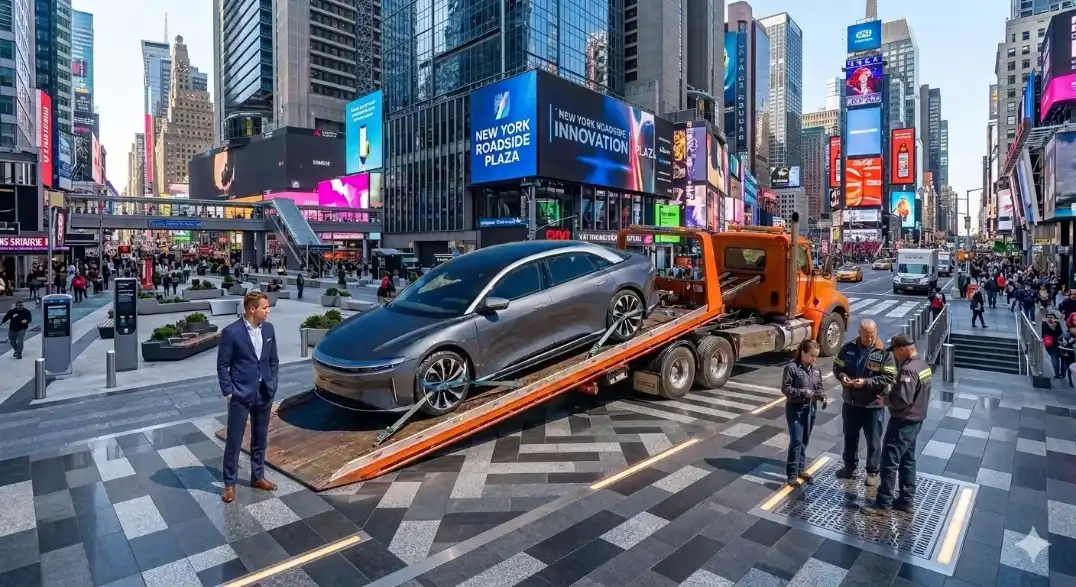
The Ultimate Solution: Flatbed Tilt-Trays Only
Due to these structural and electrical dangers, the global consensus among vehicle manufacturers, that is, a “no break” rule, is that EVs and hybrids can only be towed using a flatbed tow with all four wheels off the ground. The entire drivetrain is totally immobilized when it is loaded onto the completely flat flatbed tray and until it reaches the service center. There’s no wheels rolling, no electricity being produced and no dry gears grinding.
Delayed failure is another phenomenon to watch out for when driving. If a wheel-lift operator pulls an EV a short distance down the road, the car may begin to start up later without displaying an error code. That quick tow, though, can cause the inverter or battery modules to experience microscopic damage to the thermal and electrical stress and cause a complete blowout days or weeks later when you’re driving.
Step-by-Step Roadside Protocol
Should you get caught on the side of a busy Melbourne road, follow this simple checklist to ensure that your car is retrieved safely:
1. Secure the vehicle, and inspect the 12-volt battery
Although the electric vehicle’s high voltage battery pack drives the vehicle, the onboard safety computers, door locks and touchscreen displays are all powered by a standard 12 volt auxiliary battery. If this smaller battery is completely dead, the car will not be able to communicate with the computer systems, allowing the electronic parking brake to be released.
2. Switch from RPM to Tow (or Tow Mode)
The majority of modern electric vehicles have a special software configuration in the central touchscreen menu. When engaged, the electronic parking brakes are disengaged, and the wheels can roll at a very slow walking speed, only for the purpose of being winched onto a flatbed tray. In cases where there is no 12-volt power in the vehicle, special recovery operators will put wheel skates or dollies under the tyres, enabling the locked wheels to roll easily on the flatbed without scraping.
3. Make sure the operator employs proper tie-down points
Under the hood of an electric vehicle are some delicate parts: aerodynamic panels, cooling lines, and the high-voltage battery, which forms the structure of the vehicle. NO PROFESSIONAL OPERATOR SHALL HOOK PROFESSIONAL WINCHES OR TIE-DOWN CHAINS TO THE CHASSIS FRAME OR SUSPENSION ARMS. The standard practice in the industry for attaching an EV to a flatbed wheel tray is to fold the wheel strap over the rubber tyres on the vehicle with a tight squeeze and ensure that the vehicle stays fully rigid, not necessarily being pushed upwards against any vulnerable underbody parts.
Looking For Flatbed Tow Truck EV Recovery Melbourne?
In Melbourne, EV or hybrid driving offers a fantastic and contemporary driving experience, but facing an emergency requires a fresh perspective. Don’t solve a breakdown the same way you would a petrol car breakdown. If you’re contacting the roadside assistance service, make sure to tell them that you are driving a battery electric or hybrid vehicle, and request an EV-certified flatbed tilt-tray operator (see typical car towing prices in Melbourne). Our guide on what to tell the tow truck driver covers the rest of the call. Investing a few minutes to ensure the right equipment can save you from years of irreversible drivetrain damage that costs you tens of thousands of dollars, so book a flatbed before the car moves an inch.