Admit it, at times cars seem to have their own particular personality; calculating, no less. There’s no formula or math that can predict the perfectly-timed breakdown. You’re never likely to find your alternator seized up while your car is sitting in the safe, dry driveway of your suburban home on a sunny Saturday afternoon.
Rather, it waits until you are five minutes late for an important meeting, or even if you are driving down Punt Road, 5:30 PM, on a rainy Friday, just before a big event at MCG.
Crucially, as well as not having thoughts, cars don’t have feelings, and when they do, it’s often at the most inconvenient time, at least for a Melbourne driver. If you suddenly decided to make some noise on one of the city’s dirtiest traffic jams, you’re not the only one. Welcome to the rules that aren’t written down in The Laws of the Road!
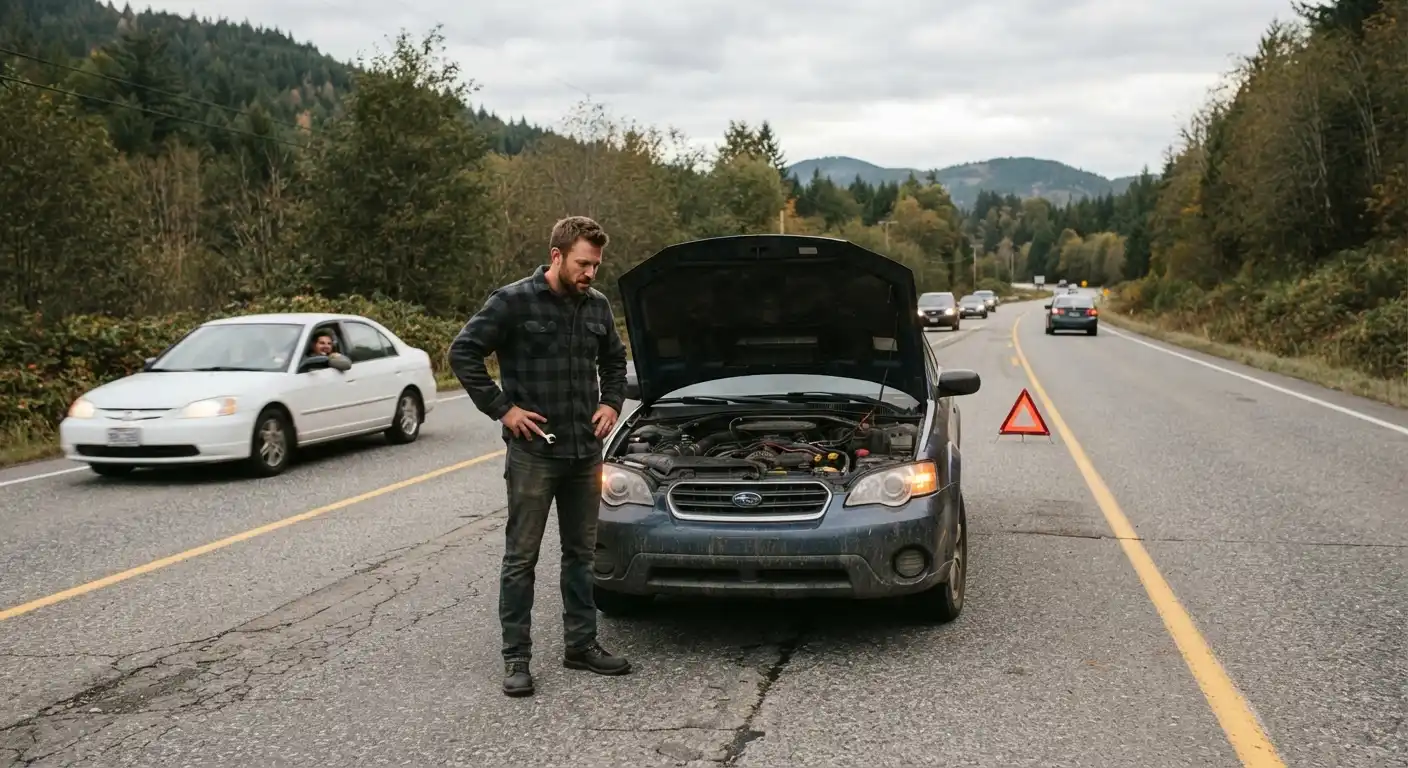
Why Vehicles Fail When It Hurts The Most: The Calculation of Stress
With an older car, there’s a sense of psychological warfare. You may work hard at keeping it, but mechanical reverses occur when you are at your weakest. Many minor underlying problems (such as a loose hose clamp, or a damaged battery cell) generally fail during certain high-stress driving conditions in Melbourne:
Inner city urban traffic conditions involve a lot of intense idling which puts a tremendous strain on cooling systems, causing the radiator to blow off right when you need to pull over.
A failing starter motor, or a faulty transmission sensor will hold on serenely on a quiet weekend drive, but once you are backed up for a major tram line in Fitzroy or Brunswick, you will be in for a shock.
The Winter Snap: A battery that is close to the end of its useful life will start up fine in mild springtime weather but on the very same morning when Melbourne drops to 9 degrees, it will fail to start up!
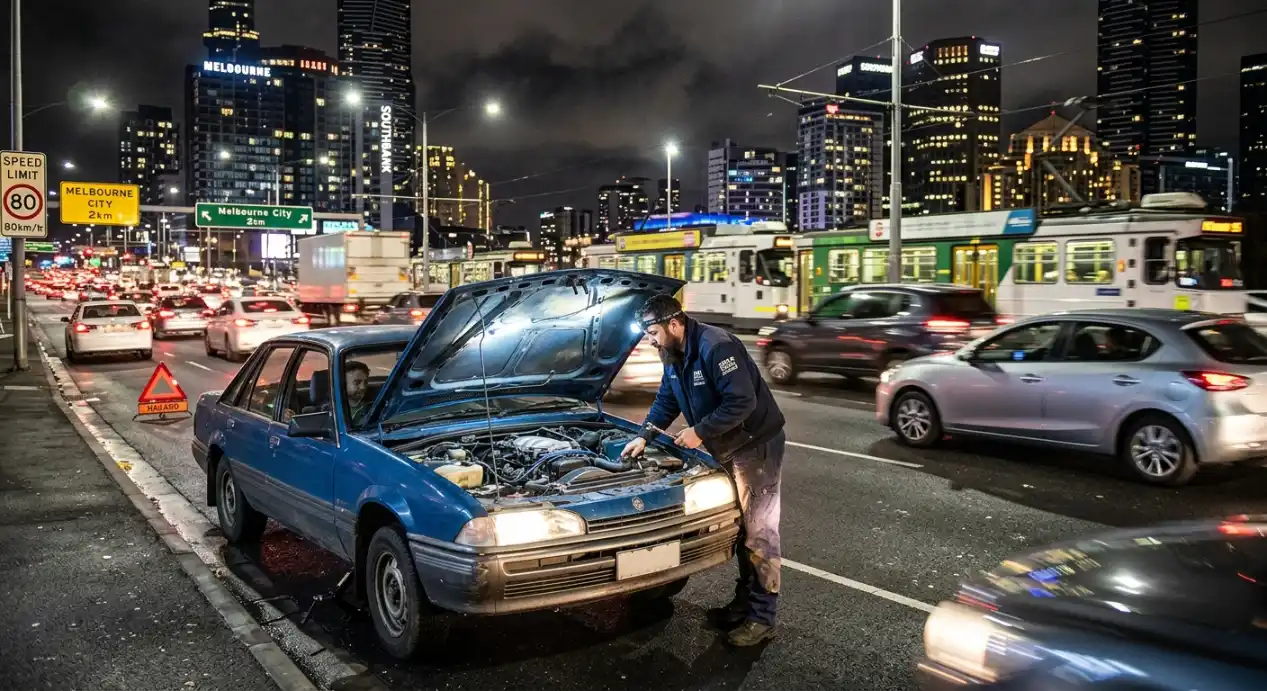
This is the “Worst-Case Scenarios” Bottlenecks of Melbourne
If you’re stuck dead on Punt Road, and you’re not the only one, you’re not alone: you’re part of a huge group of local motorists who’ve suffered breakdowns at the city’s biggest traffic bottlenecks.
The Right Lane Staller in the Burnley tunnel
It’s stressful enough to break apart in the open air. It’s a huge logistical challenge to break through at depth under the Yarra River as thousands of cars drive past you at 80 km/h. When a car stalls in the right lane of the Burnley Tunnel, it immediately sets off a multi-layered lane closure process and a fast deployment of incident response.
West Gate Bridge Overheater
Nothing beats seeing your DPIPWE temperature gauge flashing and warning you you’re in the flashing red zone as you top the highest point of the West Gate Bridge. A breakdown here, as it is narrow shouldered and has heavy crosswinds, needs immediate professional attention to avoid being stuck in a running transit lane.
The Punt Road Gridlock Special
Punt Road is not only a road, it’s a daily ordeal of patience. If a car breaks down here during a busy time, the effect reverts back down to the eastern sides on the freeway. The most efficient place for maximum disruption of traffic.
The Serious Survival Guide
When a car breaks down, we can laugh at the bad luck of it, but when a car breaks down on a big Melbourne motorway, it’s very dangerous. After the initial shock, it is crucial to immediately switch to safety protocols to ensure personal and other road user safety.
Move to safety immediately, if possible
If the engine stalls and the vehicle still has the momentum of rolling motion, try to slow the vehicle down to a safe speed. Choose a side road, a breakdown bay that is clear of trees or a flat nature strip. If you have to get out of your car to push it when the road is extremely busy, stay in your car. The danger of an accident is too great.
Maximize Your Visibility
Stop and flash your lights. If it is dark, rainy or foggy, keep your position lights on too. It is important to wear a high-visibility vest when leaving the car. If a high-visibility vest is kept in the vehicle’s glove box, be sure to wear it.
Be aware of traffic before crossing streets
Exiting the cabin is deadly if you are unable to leave the road and the traffic is near the cab door. If it’s not safe to step into a footpath or behind a guardrail, keep the belt fastened, remain in the metal frame of the car and call for help from the seat.
Alert Traffic Authorities
If your car has broken down in a live lane, tram tracks or if it poses a serious blind-spot danger, call VicRoads or emergency services right away. They can park incident response vehicles to stop the traffic safely and use flashing arrows until you can be towed.
Contact a local tow company
If you call the dispatcher for help and recovery, give accurate coordinates when calling for emergency recovery. Avoid using general statements such as “somewhere near Richmond. Check for a cross-street, a well-known area landmark, or place a precise GPS pin on your smartphone. The vehicle’s operation, such as locked wheels, fluid leak, or time-limit clearway, is explained in detail so that the operator can send the correct flatbed or tilt-tray truck, the first time.
Summary
The breakdown of your car may seem like a personal insult but a stressful situation does not have to destroy your entire week. Breathe deeply, turn on your flashers, move to a safe location and allow a professional tow company to take care of all aspects of the road clearing and safe retrieval of your car.