Nobody wants to be greeted by a stranger to their house when they come in after a tiring day only to get news from the unknown that a vehicle is parked on their driveway. Whether it’s a neighbor’s guest that “just wanted to stop by for a minute” or a delivery driver who simply couldn’t see the red signs or a “regular” that parks in your residential easement, driveway blockages are not a minor issue. These invade your rights of property, pose a safety risk, and cause disruption of your schedule.
In this scenario, it is simple to let frustration get the best of you. But a bitter confrontation, retaliatory blocking or an attempt to do damage to the other vehicle will bring only civil responsibility or legal action. First, you need to be aware of your clear legal rights as a homeowner and you need to know the right and precise method to get the car off the street in a permanent manner.
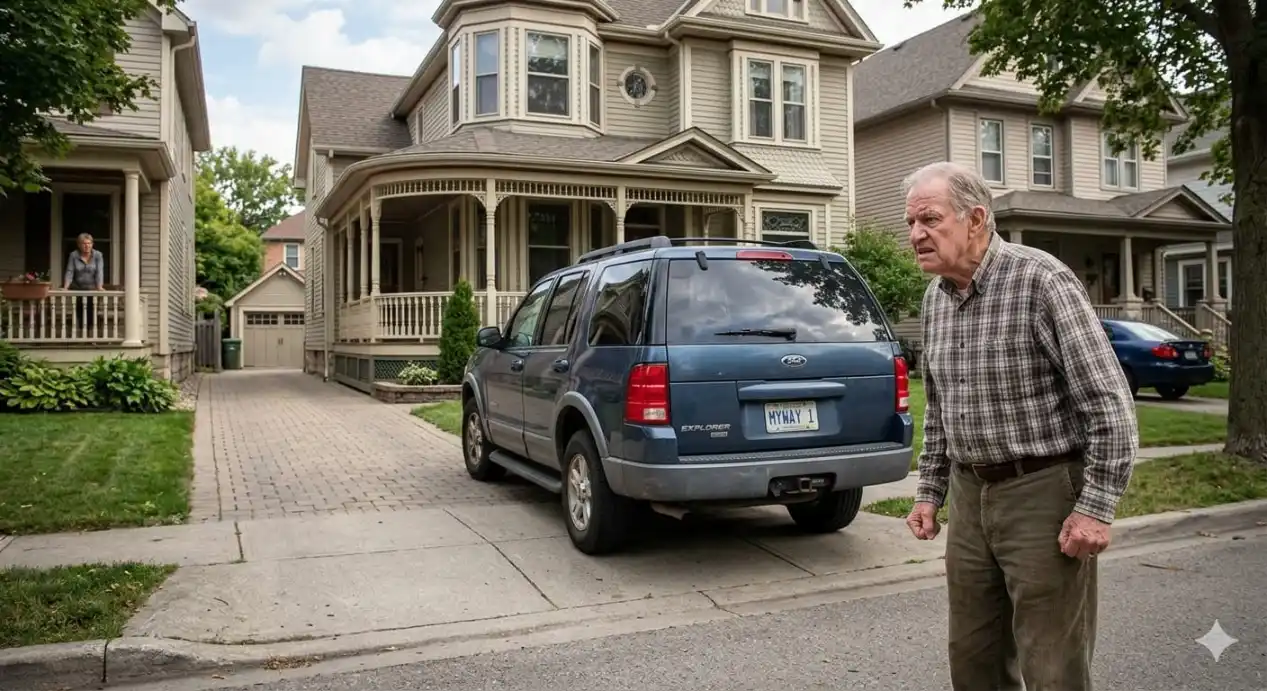
Understanding Your Legal Rights and Property Easements
To deal with a blocked driveway effectively, it’s essential to take note of the lawful difference in between your personal property and the public municipal area. Typically, a property owner would own the property to the edge of the property line, and the street, curb, and sidewalk would be considered public rights-of-way and maintained by the local municipality. But traffic regulations and municipal codes all preserve your right of access to your home.
Nearly every state has laws prohibiting the parking of any car, not just cars that take the entire space, across a driveway. This is a public right-of-way obstruction and infringement of your residential easement. If a neighbor owns the car and is parked on a public street, he or she may not block your way to or from your own property. This typically also includes other critical residential infrastructure, such as sealing off access to your mailbox, parking too near a street fire hydrant, or blocking access to the street.
How to Clear a Blocked Driveway Legally Step-by-Step
When a vehicle blocks your access to your home or your vehicle becomes trapped in your garage, take a systematic and legally acceptable approach to clear the driveway without aggravating the situation.
- Step 1: Document the Violation as it Happens. Take care to gather clear evidence of the obstruction before taking any action. Use your cellphone to snap several images from various perspectives. Make sure that the photographs clearly show the following: Make, model, and Color of the vehicle and its license plate. The location of the vehicle to your driveway, curb, or sidewalk cut. Explicit markings, signs or any landmark that suggests that it is a private driveway. If you then need to call the police or code enforcement, or even a private towing company, this documentation helps provide evidence.
- Step 2: Try a Courteous, Direct Resolution: If the car is a neighbor or a visitor who you know, a soft knock at the door is often the quickest and cleanest approach. Maintain a neutral and objective tone. Statements such as, “Hey, I have to get ready to go out in a few minutes, and your car is now blocking my driveway, can you move it really quick?” immediately defuse any tension. Most will apologize and immediately remove the vehicle creating no neighborhood animosity.
- Step 3: Engage Municipal Non-Emergency Dispatch: When the owner is unknown, does not leave, or cannot be reached, it’s time to call in the local authorities when they are not in an emergency situation. Contact your city’s police department (non-emergency) or code enforcement office. Only use emergency services where it is a life threatening emergency (e.g. the blockage is blocking an emergency vehicle, a medical transport). Tell the dispatcher what kind of vehicle it is, the license plate number and your precise address. A parking enforcement officer or a police unit will be sent to check the violation. Most cities will give an official ticket and citation. After the ticket is written, the vehicle is legally noted as an illegal obstruction and can then be legally removed.
- Step 4: Enforce an Authorized Municipal Tow. In most jurisdictions, private citizens can’t legally call a private tow truck company to tow a vehicle parked on a public street or curb; only the law enforcement or municipal code officers have that authority. Upon receipt of citation by the arriving officer, ask to have them order an immediate impound tow. The officer will notify the city rotation tow company to take the vehicle to the city storage yard and the offender will be responsible for any ticketing and retrieval costs.
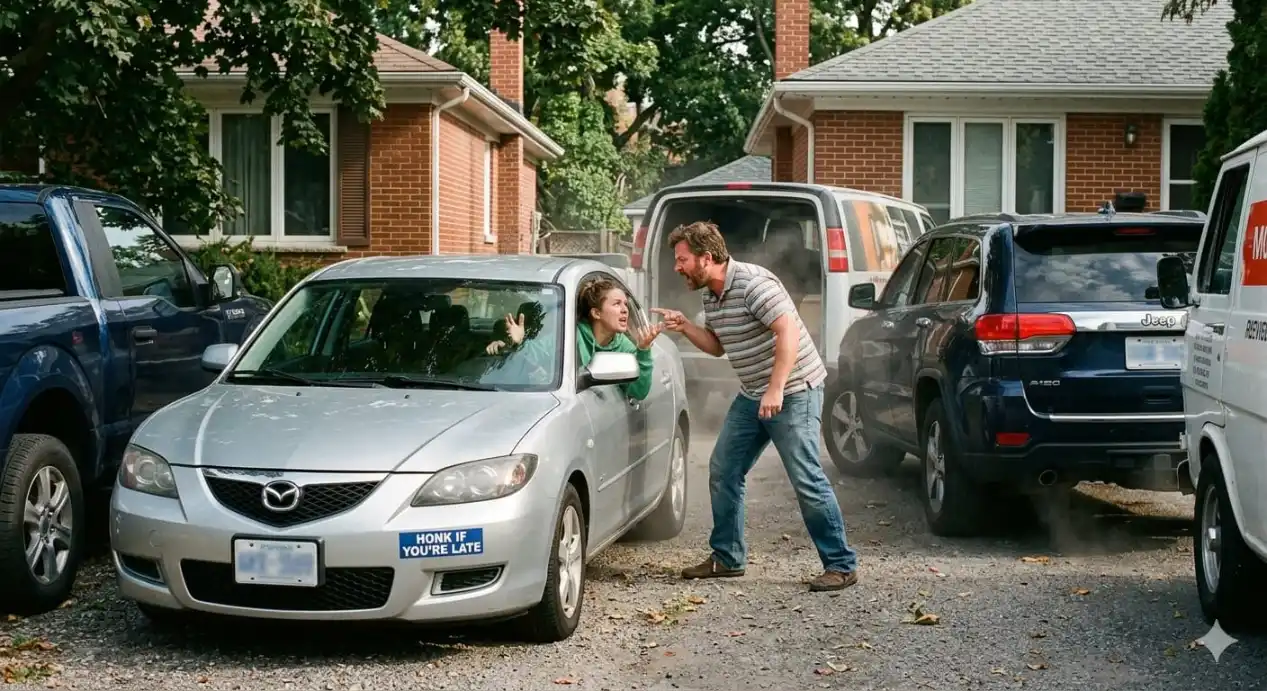
The Risks of Retaliation: What NOT to Do
When the person is uncooperative or a repeat offender, it’s important to refrain from any emotional and reactive behaviour that may have an adverse impact on the legal situation.
- Never Block the Offender’s Property: Do not block someone’s car with another vehicle. This may be legally considered unlawful detainer or harassment and you may be issued a citation as well.
- Don’t touch or adjust the car: Don’t get a feel for the car. Never try to set the lock or unlock the paint, deflate the tires, or break into the vehicle to put it in neutral. If you damage anything in any way, you are liable for the property damage and may even face criminal charges for property damage for actions that may constitute criminal mischief.
- Don’t have heated verbal confrontations: Shut your mouth and make no physical threats. When someone refuses to leave their car when asked to do so, walk away, go back to your house, and have the police deal with them.
Establishing Preventative Barriers
If you have a driveway that is a frequent place for illegal parking, then you can do proactive and passive steps to make sure that motorists don’t park there. Make the driveway entrance very conspicuous. If allowed by city ordinance, request a permit to clearly mark the NO PARKING area by painting the curb radius on both sides of the driveway a bright color (e.g. yellow or red) that is code compliant. Post a small professional sign on your property line or on your garage door that reads: “Private Driveway: Do Not Block” or “Active Driveway: 24-Hour Tow-Away Zone.” You don’t need to worry if drivers make any excuses to leave their car in front of your home when clear signage eliminates any excuse.
Long-Term Battles: Handling Chronic and Repeat Parking Offenders
Dealing With a Neighbor Who Frequently Parks in Your Driveway: Long-Term Battles is a legally binding strategy that can be used to deal with a repeat parking offender. When an offender begins to repeatedly ignore your rights to access your property, informal conversations will no longer work. In order to obtain an official paper trail, a permanent record of the actions of a chronic offender must be established.
Start with a separate parking book. Record the date, arrival and departure time, and whether you called parking enforcement, each time the vehicle impedes your driveway. Maintain copies of all police report numbers or code enforcement receipts issued. If you have a security system, including a smart doorbell or exterior security camera, save the video evidence of your driveway being obstructed.
This gathered information acts as incontrovertible evidence of a persistent nuisance, when there is a delay in the response of local authorities to calls for individual non-emergency services. This evidence may be submitted directly to your local neighborhood Homeowners Association (HOA) board to formally fine or brought to a neighborhood mediation specialist. In the worst case, an organized log and video record can become the perfect piece of evidence needed for a small claims court action by a civil attorney, which can compel the repeat offender to clear your property according to the law.