South Australians are very lucky in terms of access to the coast. You can drive right onto the beach to the beach in one of the few countries in the world where it is legal. Beach driving is an integral part of our local culture from family day trips to Moana and Aldinga beaches on the Fleurieu Peninsula to multi day 4WD trips on the rugged limestone tracks of Robe and the Coorong.
But paradise can soon become a logistical disaster! It’s only a matter of inches between enjoying the perfect afternoon and drowning a car. Hundreds of motorists are getting themselves into trouble, year after year, when the South Australian tide starts to rise.
Beach rescues are relatively frequent, but rescue techniques for modern vehicles from deep sand is no longer just a job of attaching a rope to the bull bar of a mate. Today’s complex four-wheel drive (4WD) and All-Wheel Drive (AWD) systems consist of delicate electronics, complicated suspension geometry and manufacturer rules. An improper beach recovery can lead to thousands of dollars in mechanical damage or irreparable substantial repair costs.
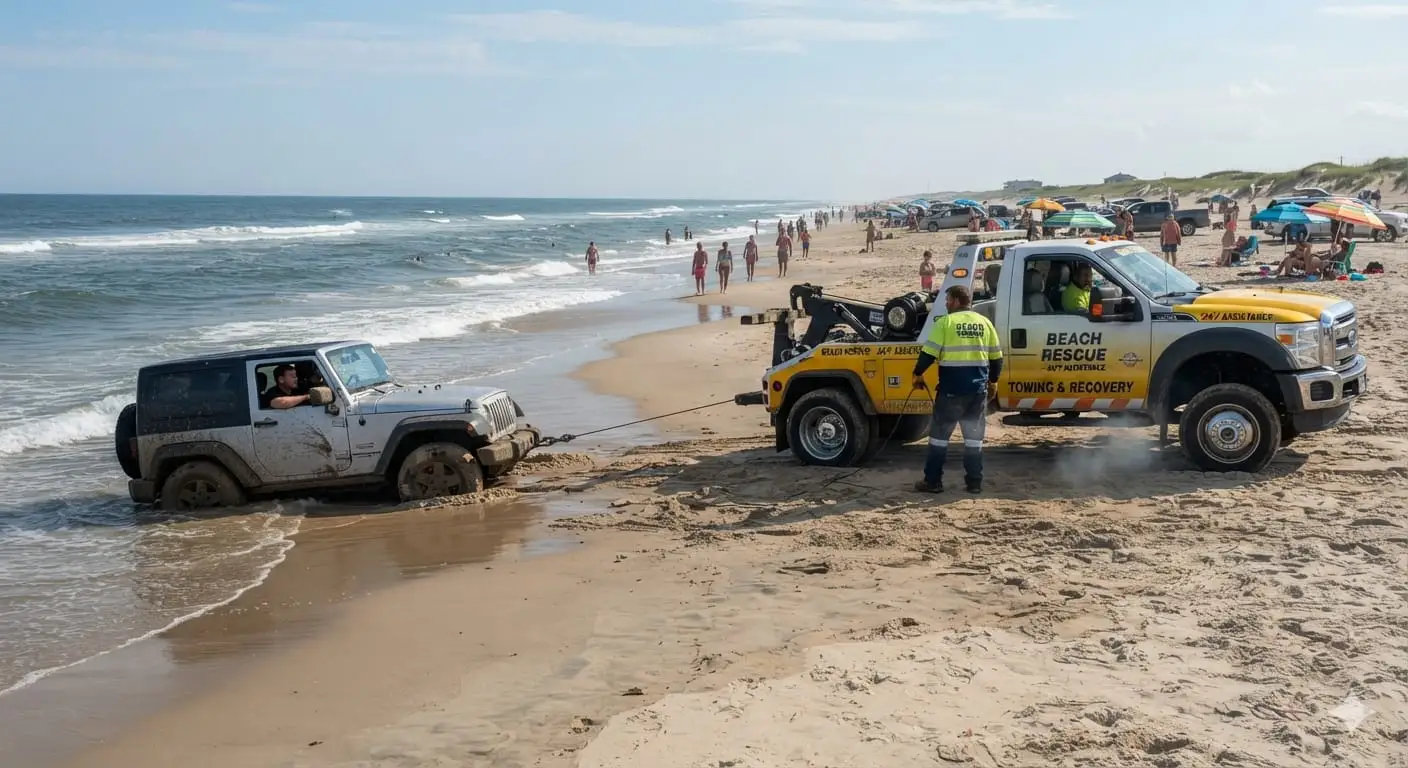
The transition from mechanical to electronic drives: why contemporary drives are vulnerable.
The mechanical to electronic shift; why modern drives are in jeopardy.
Most of the 4WDs of a few decades ago were basically mechanical four-wheel-drive vehicles. You locked the hubs, took a heavy lever and shifted it to low, and brute force was applied to the wheels. Pulling the car out with a heavy chain was hard, but basically the mechanical parts of the car survived. Things are very different in modern vehicles. SUVs and dual cab utilities of today use a lot of complex electronic sensor networks, automated braking systems and digital drivetrains.
AWD vs True 4WD: The True Difference
On many popular family SUVs heading onto SA beaches they are actually All-Wheel-Drives (AWD) and not true 4WDs. They do not have a low range transfer case, and have computer-controlled clutches to divide power. The computer systems of an AWD will attempt to make up for a bogged AWD by quickly braking individual rotating wheels. This can lead to the transmission and electronic differential getting hot in just a few minutes.
The old handbrakes have been mostly replaced by electronic buttons called Electronic Parking Brakes (EPB). The electronic parking brake may lock if a vehicle has electrical issues as a result of sand or water entering the battery. Locking of electronic brakes, attempting to drag a vehicle over high resistance sand, will destroy the rear brake assemblies, rotors and drive train components.
The South Australian Tides Is A Potential Danger
The biggest challenge in a beach recovery is time, especially on coastlines, such as the Spencer Gulf or Yorke Peninsula, where the tides can be fast and dramatic. If a car gets stuck underwater, the sand absorbs water under the tires, and it turns into quicksand. This results in a strong draw.
A vehicle that only has the chassis is able to get stuck up to its axles in an hour. The vehicle’s weight is doubled by the suction of the wet sand. When an inexperienced operator attempts to pull a vehicle that is deeply suctioned straight out of the ground without first breaking the vacuum first, it can pull the vacuum hook off, bend the vehicle structural frame, or even break the heavy steel cable, resulting in deadly flying projectiles on a public beach.
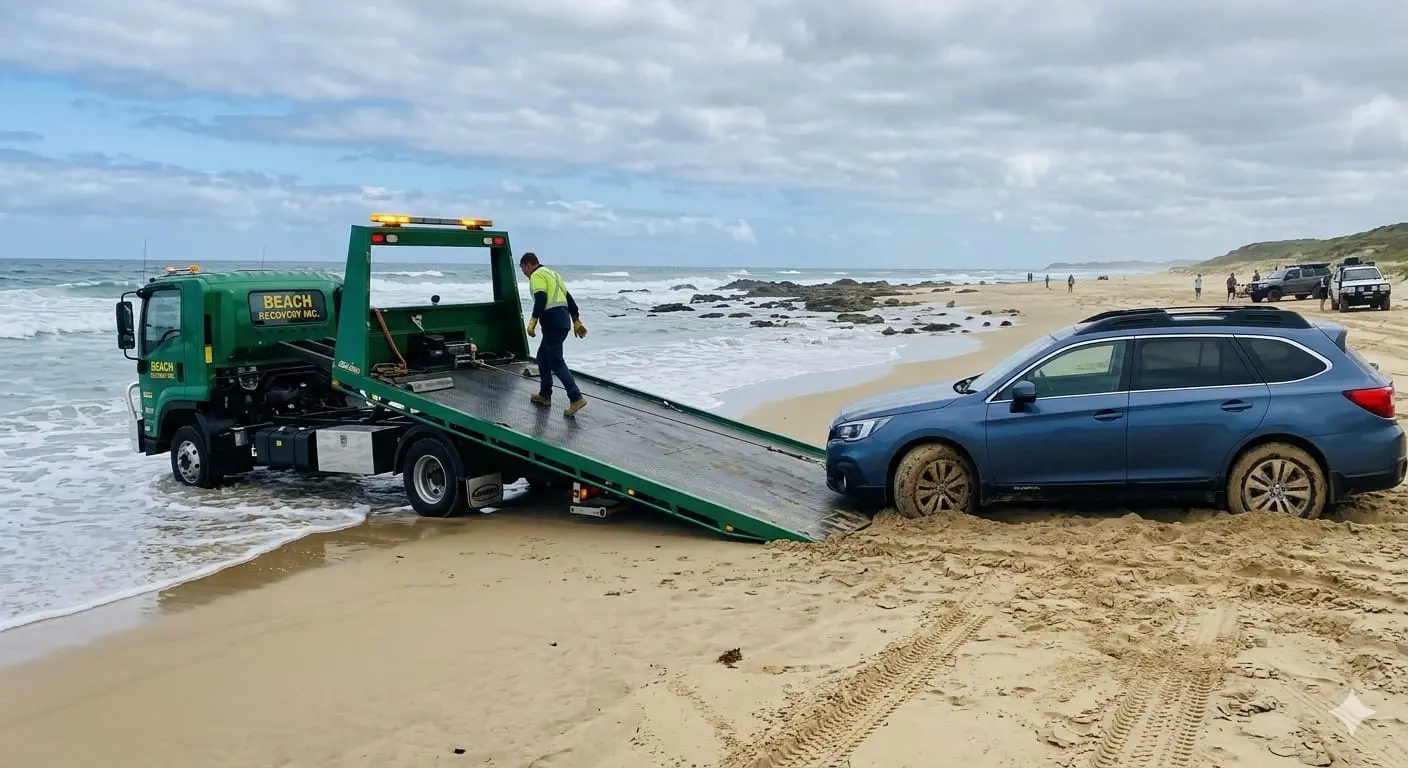
Professional Beach Recovery
This is a collection of tools and strategies used by professionals to assist in the recovery of the beach. To remove a modern 4WD or AWD from a South Australian beach safely, a highly tactical, step-by-step process is required together with the appropriate pieces of equipment. Professional recovery operators use physics and a specialized piece of equipment; not brute force.
Prior to any pulling operations, the vehicle is frequently raised up off the ground using airbags or High-Lift Jacks to lift it, so as to release the sand’s hold. The modern aluminum underbody protection is lifted safely using heavy duty exhaust jacks (inflatable rubber bladders driven by the truck’s exhaust) or special jacks.
Heavy duty tracks (such as MAXTRAX) are inserted under tires after being lifted to form Bridging and Recovery Tracks. This will make the runway firm and provide a good grip so that the vehicle can roll out by itself or be gently pulled by a winch, instead of being dragged like a dead weight through the sand.
Synthetic Rope Winching: In the modern era of towing, heavy duty synthetic rope is preferred over the traditional steel cable for beach towing. However synthetic ropes have significantly lower kinetic energy storage, so if they do break, the rope will fall harmlessly to the ground as compared to the danger of it snapping back with high velocity.
The Power of a Tilt-Tray: When the car is safely at the hard-packed sand, or on the boat ramp it is not always going home on the power. Salt water can seep into wheel hubs, brakes, and electrical, and this can speed up corrosive damage when operating the car. Using a special tilt-tray truck places the vehicle on a safe load bed to go to a mechanical washdown shop.
If you find yourself stuck on an SA Beach, call the Coastguard (09112) or the local emergency number.
Safety Measures To Implement
If your tires are getting stuck in the sand and the car isn’t going forward, here are some immediate steps you can take to limit damage:
- The first step is to get off the gas: As soon as you take your foot off the gas, stop spinning your wheels. Failing to spin the tires only makes the process of getting the vehicle off the sand twice as hard, and will cause the vehicle’s chassis to be pushed deeper into the sand.
- Check the Tide Times 2: As soon as you have the local bureau of meteorology tide charts on your phone. Whether the tide is in or out will determine the speed at which you need to act.
- If you haven’t done this already, reduce the pressure on your tires to get a larger grip. In some cases, simply reducing to 12-15 PSI will enable the car to bounce out on its own.
- Seek Professional Help Early: If things are going up, and your recovery is not going as you thought, don’t wait until the water comes to your door. Contact a local South Australian licensed towing firm that specialize in off road and beach towing services. Indicate with a pinpoint on the map or a beach access ramp number where in the state you are and the current water level.
Protecting Your Investment
Beach day in South Australia must be a good one. While modern vehicles may be incredibly comfortable and capable, they still have a delicate side, and when it goes awry, a treat with respect and care is in order. You’ve gotten yourself stuck in the middle of an ocean adventure, the bystander crowd “snatches” you and you would prefer to be recovered professionally in a way that won’t harm your assets.