You have been stranded on the Eastern Freeway and slowly, your patience is running out. You fuse two and two and come up with a thought of fixing (ruining) your car yourself!
You decide to drive on a flat tyre, leaving the parking brake engaged—or even worse—operating on an overheating engine. Or if you’re feeling extra brave amid a classic Melbourne southerly change—you could try to winch your car yourself using a rope your dad used for his horse stables back in the 1980s.
DON’T DO THAT.
Trying any four of these (or inventing new if you’re curious) will end up in damaging your car further than making it any better. The best decision you can make for your vehicle is to call a tow and leave the mechanical fixes to the tow team until help arrives. This blog is designed to list the steps to take to prepare your car for a tow in Melbourne, and the things to avoid to prevent costly damage.
Get Yourself and Your Vehicle Out of Harm’s Way First
Whenever you are stuck in either a ditch or mud, or have been in an accident—ask yourself these two questions: Can I move myself? Can I move my vehicle?
If the answer is yes for either of the above, get yourself and your vehicle out of harm's way immediately. Highways in Melbourne are known for their notorious driving patterns. If you are stranded in the middle of the highway, or even close to it, not moving yourself to safety as soon as you can can put you in a greater danger than just a damaged car. However, if you happen to find yourself in an immobile situation with an accident (i.e pinned inside the vehicle with jammed doors, deployed air bags blocking the exit, stuck door latch, live traffic, physical injury, or environmental hazards around the car), call 0000 immediately. If you are stuck with a dead vehicle (i.e locked wheels, seized engine, dead battery, deployed airbags, stuck in a ditch, mud or soft coastal sand) call a tow service immediately.
If you are physically able to move and your vehicle is blocking the lane behind you, seeking a safe spot is an immediate priority, coasting or rolling your vehicle even a few metres onto the emergency shoulder can keep you safe. If the car is stuck in "park" due to a dead battery, telling the tow operator upfront lets them bring wheel skates/dollies so they don't drag the tyres!
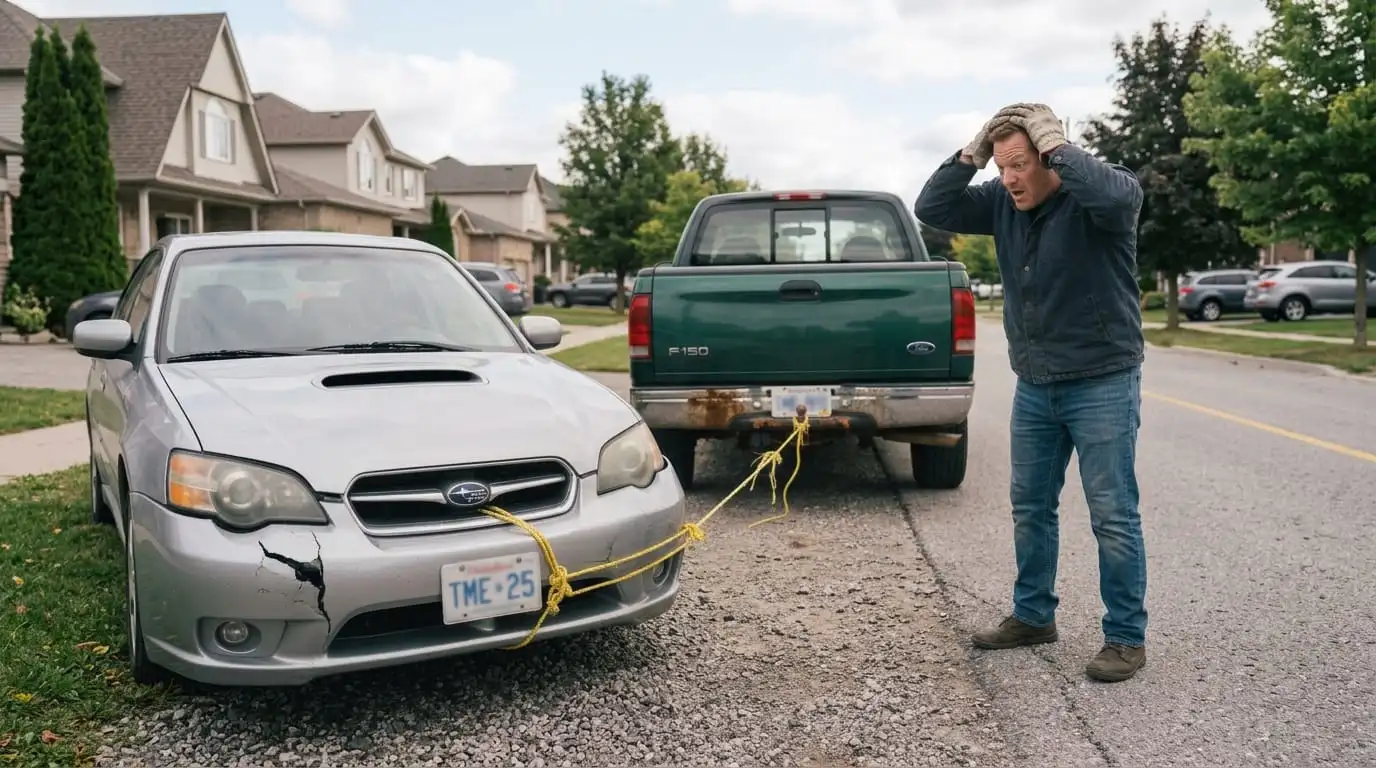
Resist the Urge to Keep Driving (or Attempt DIY Towing)
As tempting as it sounds to just drag your car yourself, save money for a tow, go home and then narrate the story of your “adventurous night” animatedly to your friends, exaggerating it as if you fought a bear—is not worth it.
Driving with an overheating engine: Leading a vehicle with an angry engine can do more damage than the bear you are about to tell your friends about. Driving with an overheating engine could literally melt off the hoses, sensors, and plastic radiator parts, it could blow up the head gasket and turn your cheap radiator fix into an entire engine replacement.
Limping along on a flat tyre: Trying to drive a vehicle on a flat tyre if you want to set an example for why not to do it. Attempting to do so damages wheel bearings, suspension, and alignment, ruins your steering control, and risks losing traction—all while shredded rubber whips around, tearing brake lines or ABS wires and bending or cracking the alloy wheel rim, turning a simple tyre change—which would’ve probably taken 5-7 minutes—into a five-hundred-dollar car repair.
Ignoring red warning lights or loud noises: If you hear a “whoosh-hiss” sound and suddenly your car jerks and dies, or if you hear a “skrrt” sound like someone auditioning for Nam-gyu in Squid Game 2, do not ignore these sounds. Your dashboard lights are basically your car’s way of waving a red flag before things go south. While yellow or amber lights usually mean you need service soon, red warning lights—like the oil pressure can, battery icon, brake warning, or a flashing check engine light—mean stop driving immediately. Pushing past them might get you another couple of kilometres down the road, or it might completely seize your engine or leave you without brakes in the middle of traffic.
Winching it with a DIY rope: Your version of “independent” by trying to haul out your car with ropes could end up injuring you, damaging your car, injuring someone else, and might as well get you known to the local police—while you probably won't end up in handcuffs for trying a DIY rope tow, attempting one on a busy Melbourne road can land you with heavy traffic fines for careless driving, and if that rope snaps or your unpowered brakes fail, you'll be paying for a smashed bumper on top of a tow truck anyway.
Shift Into Neutral and Release the Parking Brake (When Safe)
When the tow truck arrives, if the driver instructs you, the easiest way to avoid damage to your gearbox and tyres is to move your car in neutral (N) and take off the handbrake.
The tyres are dragged across this tarmac when a vehicle in automatic or AWD is left in the Park position when they are being winched on to a tilt tray, and when handbrake is applied. The added stress can cause bulges in your tires, brake cables to break or the parking pawl, the small metal pin in your transmission that holds the wheels locked while you're in neutral. However, be sure to not let off the brakes too soon, when stopping on a sloping Melbourne street or Avenue; otherwise your car may roll into traffic before it's “hooked.”
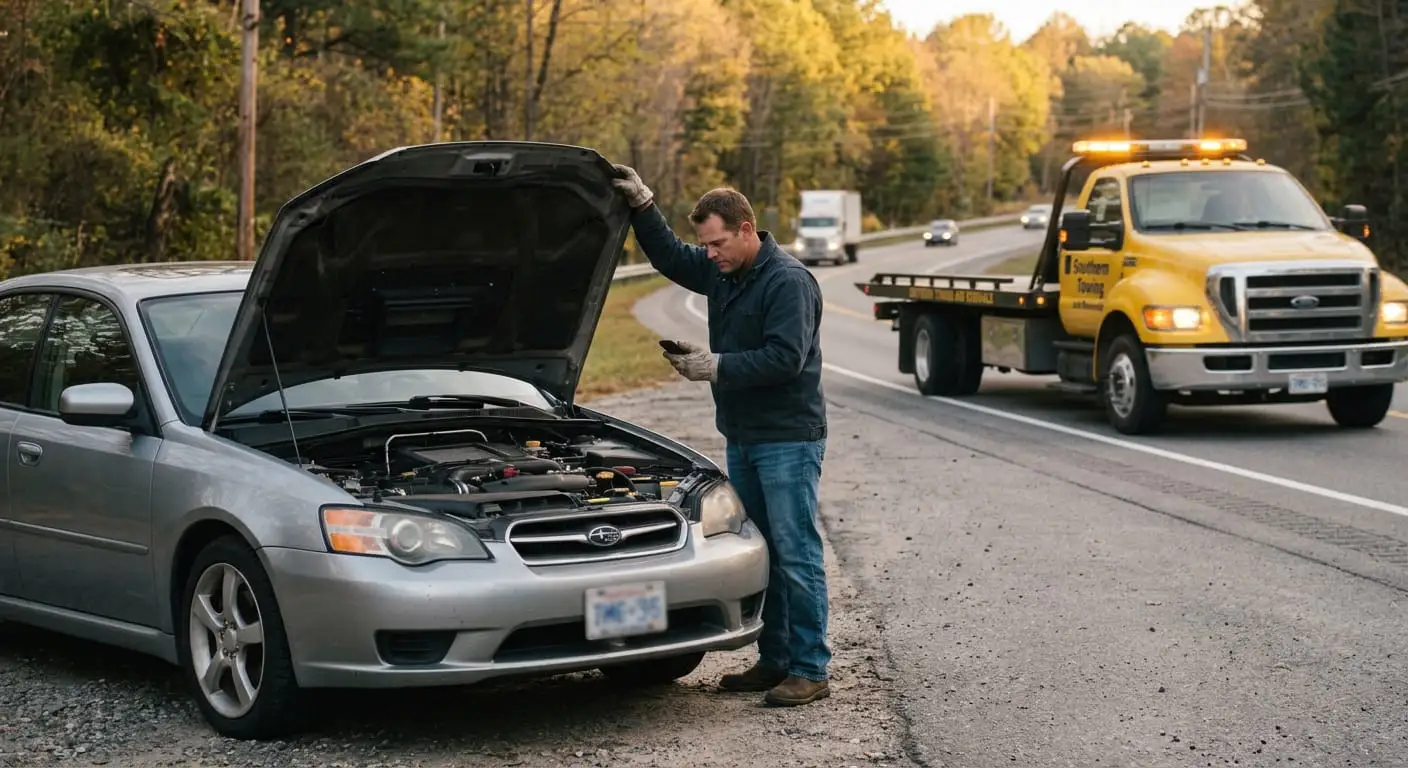
Securing Your Valuables Before a Tow
Before the tow truck bridal-carries your car to deploy it to the altar (mechanic)—please secure your essentials and loose items before you see them flying across the cabin once it's too late. When a tilt-tray tow truck angles the bed upward to load a car, anything heavy and unstrapped in the boot or back seat will slide straight forward and can crack interior screens or trim, causing you a new headache of repairing the damaged console. Please gather your things like your wallet, laptop, chargers, glasses, empty coffee cups, house keys, important documents, umbrellas, glass containers, gym bags, or literally anything that is dear to you and would cause damage to your vehicle if it falls during the tow. Don't forget to roll up your windows, close the sunroof, and fold in your side mirrors so Melbourne’s sudden rain showers and highway winds don't cause extra damage along the way. Taking two minutes to clear your car keeps your belongings safe, and saves you from having to lie to your parents about where that brand-new Stanley went that they just bought you last week.
Snap Quick Photos and Share Your Car’s Drivetrain
Before your car is loaded onto the tow truck, take a moment and film your car's current condition from all angles. Film the bumpers, the panels, go across it, film the wheels and the extent of the damage so you have a documented proof of the damage before it is taken away. If something happens to your vehicle during the tow, you can always pull the video from before and demand compensation for the new damage.
Also, make sure to tell your tow truck operator when you call whether you drive a front-wheel-drive, rear-wheel-drive, or all-wheel-drive (AWD) vehicle. All-wheel-drive (AWD) SUVs, 4WDs, lowered sports cars, and electric vehicles (EVs) should never be towed with two wheels rolling on the tarmac, as this can cause serious damage to the gearbox, transfer case, or battery pack. Sharing your make and model upfront ensures a flatbed or tilt-tray tow truck is dispatched so all four wheels of your vehicle are kept well clear of the road.
Ready to face the tow truck with a brand new confidence? Contact Southern Towing & Removals today to request a quote.