The central business district (CBD) of Melbourne is a showcase for dynamic urban planning, combining old and new. Yet, under the frenetic surface and behind facades of buildings are a multitude of low-clearance spaces. The underground structure of our city is defined by multi-story parking garages, underground parking bases and historic railway underpasses. These spaces maximize urban efficiency, but can be a challenge for drivers if a vehicle experiences mechanical failure, tire blow out or has low clearance conditions.
Breaking down on an open stretch of the open highway is stressful enough. Parking on level four of a multi-level, underground shopping centre (with a headroom of only 1.9m) is a logistical nightmare and a whole lot of claustrophobia. These confining conditions pose a challenge for standard tow trucks, leaving drivers in a very constricted space.
Southern Towing & Car Removals, a low clearance vehicle recovery company spread throughout greater Melbourne, knows how to recover vehicles from the most difficult areas of the CBD, particularly with an engineering understanding, an understanding of specialised equipment and a head for strategic solutions. The site offers a complete overview of the reasons why a low clearance recovery is so challenging and how it is performed by professional operators.
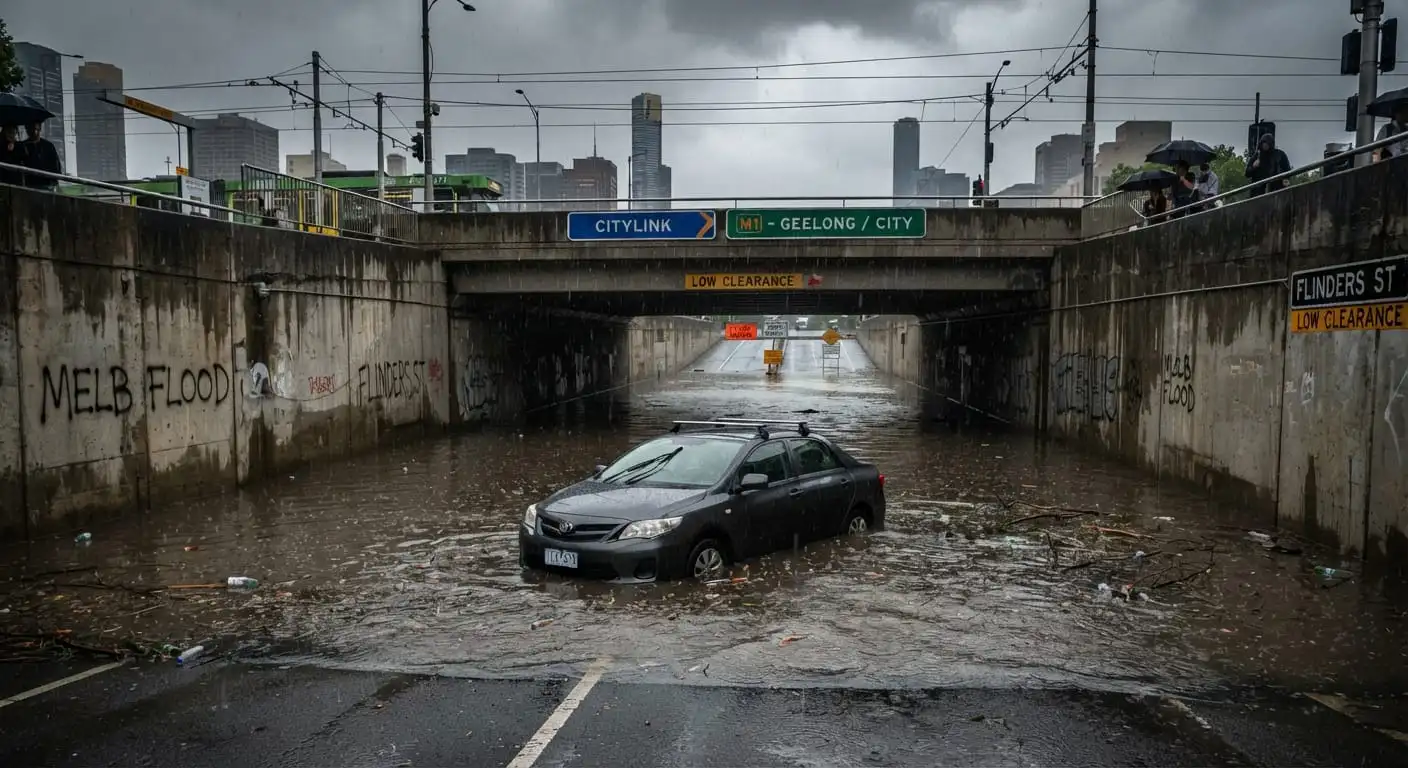
Logistical Architecture of Melbourne’s Tightest Spots
The architectural design of the city centre of Melbourne is a good example of why low clearance towing will need a specialized approach to ensure that the operation is carried out safely. There are numerous multi-storey car parks in the CBD and inner city areas such as Carlton, Southbank and Docklands, designed decades ago. They are designed at a tighter dimension, allowing no easy access for modern sport utility vehicles (SUVs), large commercial trade utilities or roadside assistance vehicles. The main challenges of such special recoveries are:
Limitations of ceiling heights
A number of multi-floor car parks have a ceiling height of 1.85 to 2.1 metres in older car parks. Inside such buildings a typical flatbed/tilt-bed tow truck needs at least 2.6 to 3.0 metres as an operating clearance to pass the lanes, so it can’t operate at all.
Tight turning radii
Helical ramps which join the levels of multi-level car parks are a well known problem in the car park design world because of their acute angle approach, these are also known as Tight Turning Radii. The short-wheelbase recovery vehicles cannot negotiate the sharp corners without scraping the structural concrete barriers, or blocking the flow of oncoming traffic.
Enclosed overhead infrastructure
Low ceilings are further complicated by the overhead infrastructure (hanging fluorescent light units, cable trays, structural concrete beams, exposed air conditioning ducts, commercial sprinkler systems, etc.). An inexperienced operator can cause severe property damage, which is one reason cheap towing so often ends up costing more.
Why Standard Tow Trucks Are Not Able To Enter
A driver’s instinctive reaction to a dead battery, blown transmission or locking brakes in a confined area is to call standard roadside assistance. But as soon as the normal tilt-tray truck reaches the street outside, the driver will see the restrictions.
The conventional tilt-tray truck uses a large hydraulic deck to tilt down at the rear creating a ramp behind the truck bed. This process is very demanding and requires a lot of overhead clearance (often 4 meters high) since the tray is pushed up in the air before being pushed back down. If this was attempted on an underground parking deck, it would immediately break through the ceiling grid and compromise building utilities and cause significant structural damage to both the recovery asset and roof.
In addition, conventional flatbeds can not safely remove a vehicle with locked wheels from a tight, concrete parking bay without causing the tires to slip across the concrete. This can damage the vehicle’s drivetrain, steering parts and suspension links.
The Specialized Low-Clearance Fleet
A towing company can help with removing a vehicle from a tight spot, but it involves a different type of vehicle towing equipment. Southern Towing & Car Removals’ fleet of trucks is all equipped with low-profile, quick-recovery models designed to maneuver in tight spaces. The special low clearance vehicles have distinct technical designs:
Ultra-Low Profile Chassis
We have specialized vehicles with very low, compact utility truck bodies with lowered suspension systems. This prevents the overall height of the recovery vehicle from exceeding the manufacturer’s recommended limit of 1.9m. These units can easily maneuver around underground parking decks in the same way as a regular passenger vehicle.
Underlift and Wheel-Lift Retraction Systems
Low-clearance units have a heavy-duty hydraulic boom arm that is mounted low to the ground at the back of the truck, which is used in lieu of a large tilting tray. This arm is positioned low and along the ground, under front or rear tires of the disabled vehicle. The roofline on the vehicle stays low with cradle brackets securely holding tyres to a few inches above the road.
Integrated Dolly Wheels
Mechanical skate dollies are used when the vehicle is stuck in a parking bay, with a locked 4WD system or an electronic handbrake that cannot be released. These tiny wheels with a huge capacity are located directly under the locked tyres. The configuration facilitates the operator to gently drive the vehicle sideways out of the parking space, without having to go over any overhead space and without causing damage to tyres. The same skates are what make towing AWD and 4WD vehicles safely possible when the drivetrain can’t be left rolling.
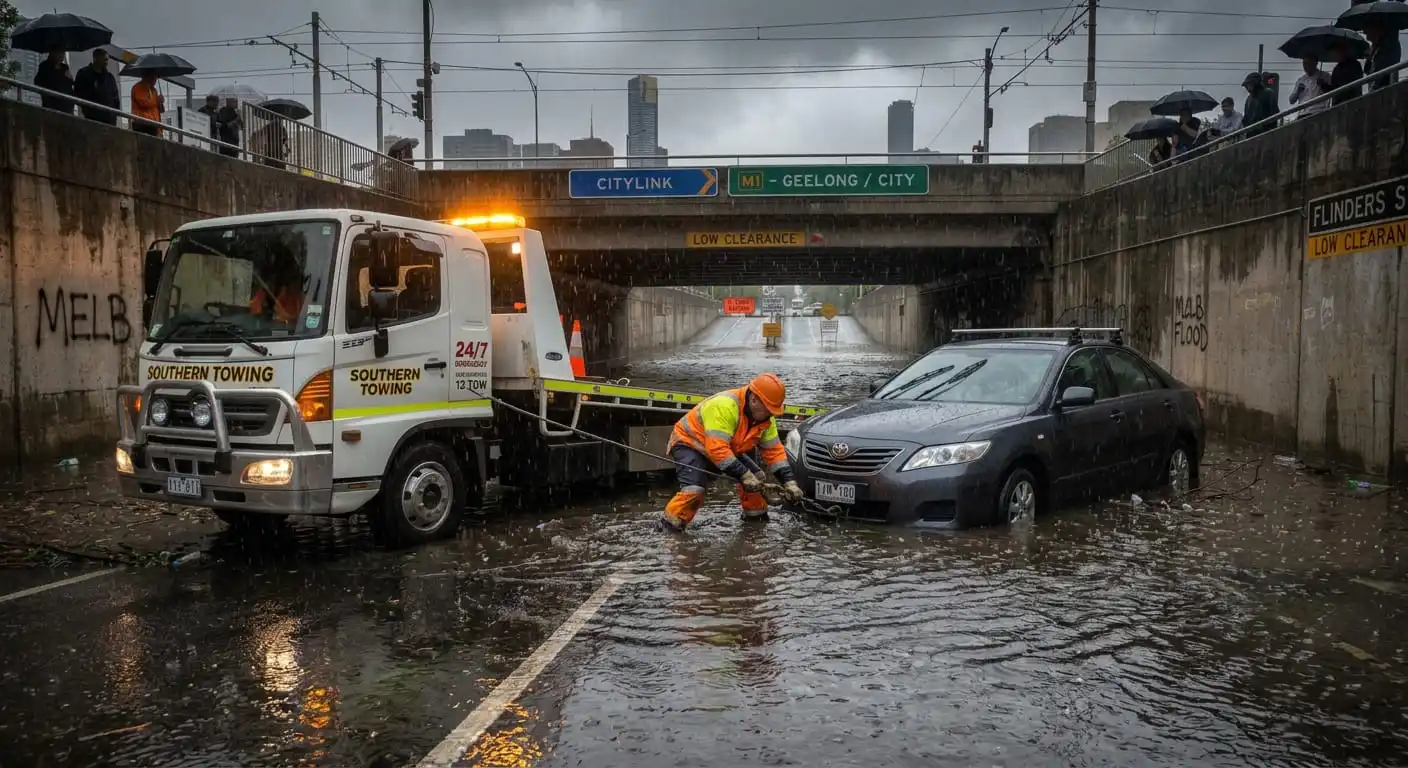
If Your Car Has Broken Down in a Low Clear Overpass; Here’s What You Should Do
When a vehicle is left in a Melbourne CBD underground garage or near a low underpass, the right actions at the outset to reduce delays and ensure public safety. Look for structural signage to note the garage level, parking bay number and maximum overhead clearance noted at the garage entrance. Give it to your dispatch operator this exact information. If there is steering or electronic failure in the vehicle but a slight roll-off is still possible, attempt to steer straight. This makes the process of a low profile wheel lift mechanism to grab onto your tyres much easier and cleaner.
Do Not Push or pull the Vehicle: If the vehicle is stuck under a low hanging beam or under an underpass do not push or pull the vehicle. Such actions can result in damage to the structural frame of the building or to the building’s infrastructure. Stop and wait for a professional evaluation. If rising water is part of the problem, follow our guide on what to do when a flash flood traps your car.
Inform your TOWING FIRM right away that your vehicle is in a low access zone. Use a low bed unit to prevent a flatbed from coming to your door and having a 45-degree entrance. Our list of what to tell your tow truck driver covers every detail worth giving the dispatcher.
The Importance of Professional Skill
It is a big challenge to work heavy hydraulic equipment in a limited space with concrete. It demands operators who have knowledge of load distribution, cable winching angles and the precise physical size of their machinery.
Extractions where the height is a concern are a very technical recovery task at Southern Towing & Car Removals. Every day we drive through the complex network of Melbourne’s CBD, managing traffic to get it moving, and efficiently and safely towing away vehicles from tricky spots in the CBD without causing any other damage to vehicles or properties. From a car stranded on the lowest level of a shopping center due to an engine failure to a delivery van under an overpass that is too low, a well-trained team is available to respond to any logistical challenge with a controlled and professional approach. Compare car towing service rates or contact our dispatch team with your car park’s clearance height.