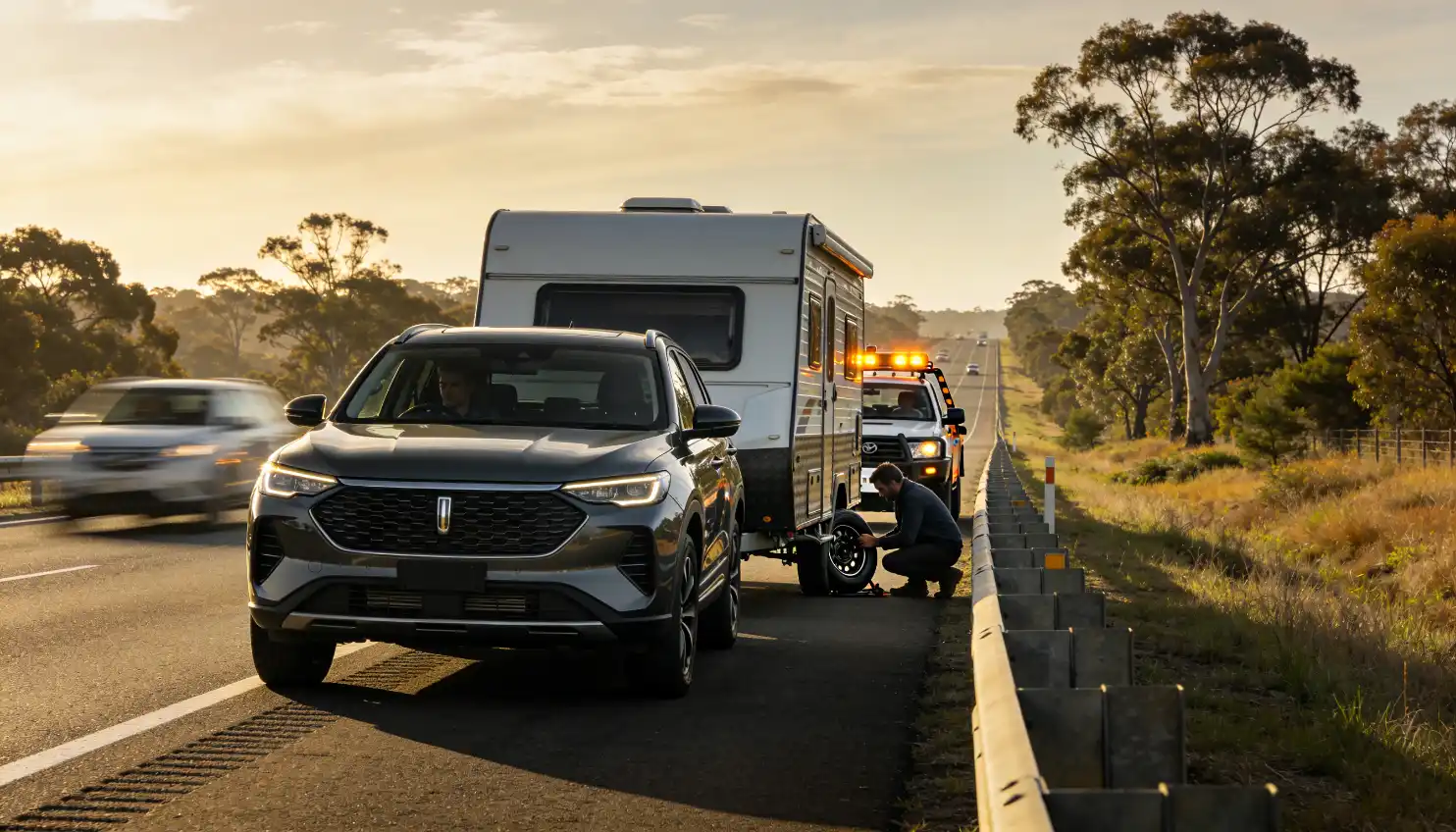
A caravan trip can go from relaxing to stressful in a matter of seconds. One strong crosswind, a hidden loading mistake can turn a holiday adventure into a dangerous roadside situation in a matter of seconds. Over the past few years, more Australians have taken to the roads with caravans, but many drivers still underestimate the risks involved in towing on busy highways. The reality is that most caravan safety problems on Australian highways don't happen out of nowhere - they usually start with small warning signs that get ignored until something fails at highway speed. From caravan sway and tyre blowouts to overloaded setups and suspension issues, these problems are responsible for countless breakdowns and emergency recoveries every year.
As a towing company serving Southern Melbourne and surrounding areas, we've seen many of these situations firsthand. In this guide, we'll look at the most common caravan safety problems, why they happen, how to prevent them, and when it's safer to call for help rather than continuing the drive.
The Most Common Caravan Safety Problems on Australian Highways
One thing many drivers discover too late is that towing a caravan is very different from normal driving. A vehicle that feels perfectly stable around town can behave completely differently at 100 km/h on an open highway. One of the biggest issues is caravan sway. This often starts when weight isn't distributed correctly, the tow ball weight is too light, or strong crosswinds hit the side of the van. At first, the movement may seem minor, then the caravan begins moving from side to side and quickly becomes difficult to control. Overloaded caravans are another major concern. Many travellers load bikes, generators, extra batteries, water tanks, and camping gear without checking total weight. This puts extra strain on tyres, brakes, wheel bearings, suspension components, and the tow vehicle itself. At Southern Towing & Car Removals, many roadside recoveries involving caravans often begin with issues that could have been identified during a simple pre-trip inspection. A few minutes spent checking critical components can prevent hours stranded beside a highway.
Why Highway Conditions Make Caravan Problems Worse
Australian highways create unique challenges for caravan owners.
- Long distances
- Changing weather conditions
- Heavy vehicle traffic
- High travel speeds
all increase risk. A common problem many drivers overlook is truck turbulence. When large trucks pass at highway speeds, the air pressure around your caravan changes rapidly. If your weight distribution is already marginal, this sudden pressure shift can trigger sway. The same applies when travelling through exposed areas during strong crosswinds. High temperatures also create problems. Tyres build heat naturally while travelling, but overloaded caravans generate even more heat. A tyre that appears perfectly fine at the start of a trip can fail several hours later, especially during summer travel. Another issue is driver fatigue. Many caravan owners plan ambitious travel days and spend long hours behind the wheel. Fatigue slows reaction times and makes it harder to recognise early warning signs such as unusual
- caravan movement
- Braking changes
- Steering instability.
and many others. Experienced towing operators regularly attend breakdowns where fatigue plays a role in poor decision-making.
Warning Signs Drivers Should Never Ignore
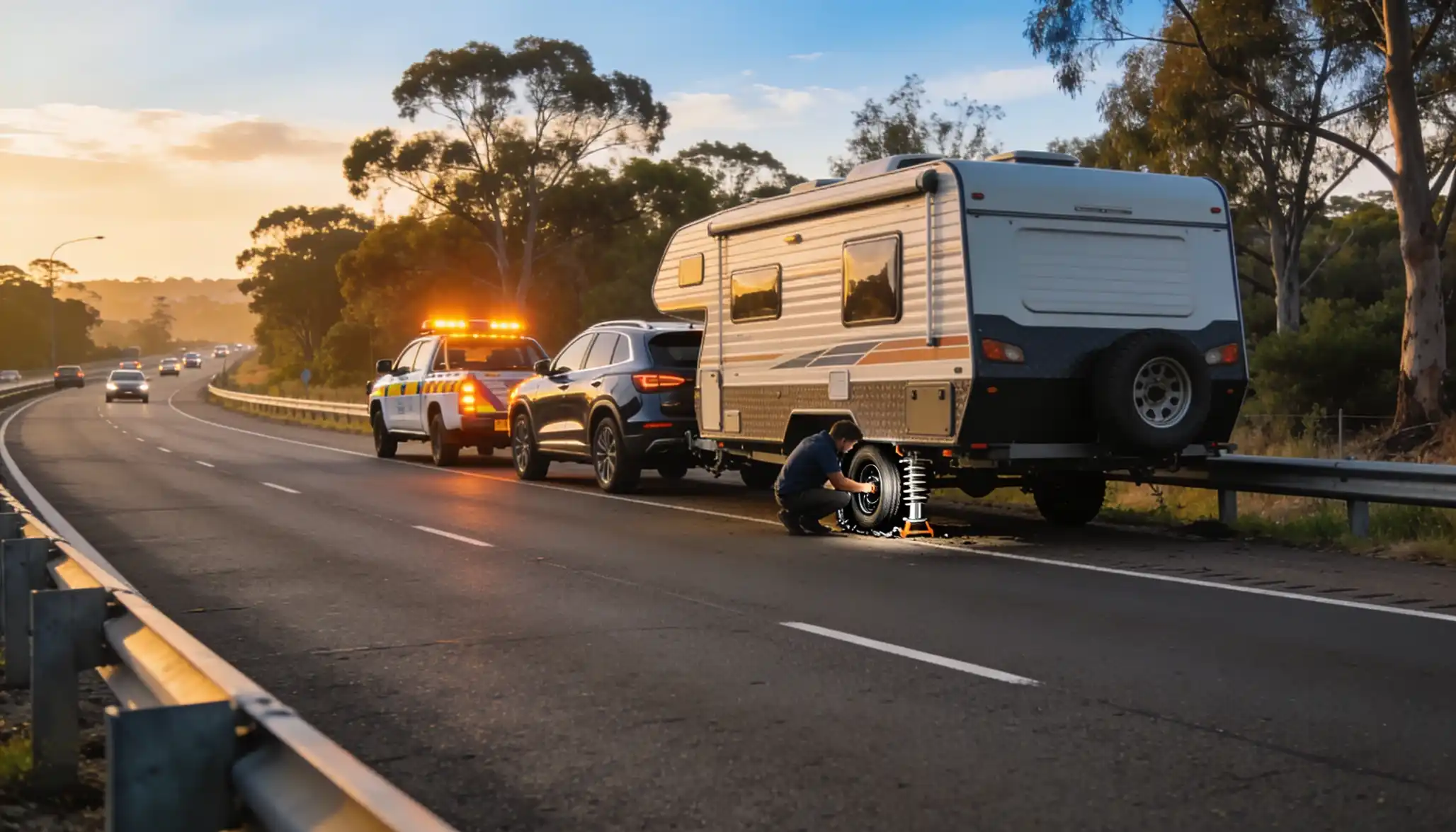
Most serious caravan failures give some warning before they occur. If you notice unusual tyre wear, increased sway, vibration through the steering wheel, burning smells from brakes, unusual noises from wheel bearings, or the caravan pulling to one side, these are signs something needs attention. One simple habit many experienced travellers follow is performing a visual inspection every time they stop for fuel. Walk around the caravan. Look at the tire condition, check wheel temperatures carefully, inspect the coupling and safety chains. Make sure lights are still functioning properly. Small problems rarely stay small for long when travelling at highway speeds.
The Loading Mistakes That Cause Caravan Instability
Poor loading choices are the root cause of many caravan accidents across Australia. Simply packing everything in without a plan can quickly lead to dangerous towing conditions on the highway.
Here is what you need to keep in mind to stay safe:
- Heavy Item Hazards: Placing bulky items at the back causes severe caravan sway, while stacking too much weight at the front overloads your vehicle's rear suspension and ruins steering control.
- Smart Loading Practices: Always pack your heaviest gear low and centered over the axle, balance cargo evenly from side to side, and avoid throwing in extra last-minute luggage without rechecking your overall weight distribution.
Comparison Table: Unsafe Habits vs Safer Caravan Practices
| Unsafe Habit | Safer Alternative | Potential Benefit |
|---|---|---|
| Guessing caravan weight | Professional weight check | Improved stability |
| Loading heavy gear at rear | Keep weight near axle | Reduced sway risk |
| Skipping tyre inspections | Check tyres before every trip | Lower blowout risk |
| Ignoring service intervals | Regular maintenance | Fewer breakdowns |
| Driving through severe winds | Delay travel if needed | Better vehicle control |
When It's Time to Stop Driving and Call for Help
Many drivers continue towing even after noticing warning signs because they hope they'll reach their destination without further problems. Unfortunately, this decision sometimes turns a manageable repair into a dangerous recovery situation. If caravan sway continues despite adjustments, if a tyre fails repeatedly, if brakes feel inconsistent, if wheel bearings overheat, or if suspension components appear damaged, continuing to drive may not be the safest option. We've attended situations across Southern Melbourne and regional Victoria where drivers attempted to continue after noticing obvious problems. In several cases, a simple recovery would have been far less expensive than the damage that followed. Professional towing and recovery services exist for these situations. Sometimes the safest choice is recognising when the journey should pause until the issue is properly resolved.
If you are unsure about your setup before leaving, revisit our guide on tow rating so the caravan and tow vehicle limits are clear. For urgent roadside issues, Southern Towing & Car Removals can arrange emergency towing when the caravan is no longer safe to move, or car towing service support if the tow vehicle itself needs recovery.
Conclusion
Most caravan safety problems on Australian highways can be prevented with proper maintenance, careful loading, and regular inspections. The key is acting early when warning signs appear. And if something doesn't feel right on the road, the team at Southern Towing & Car Removals is always ready to help drivers get home safely. If a breakdown does catch you mid-trip, read our guide on what to do if you end up stranded on the road and, if price is on your mind, why a budget tow truck could cost you more in the long run.
For flat-rate tiers from camper trailers to luxury vans, see our caravan towing prices.